Custom Cargo Pants: The Ultimate Guide to Designing Streetwear Bottoms
- Share
- publisher
- Chanjoye
- Issue Time
- Aug 12,2026
Summary
Master the art of custom cargo pants design for streetwear. From pocket configurations and fabric choices to fit styles and hardware selection, everything you need to know.
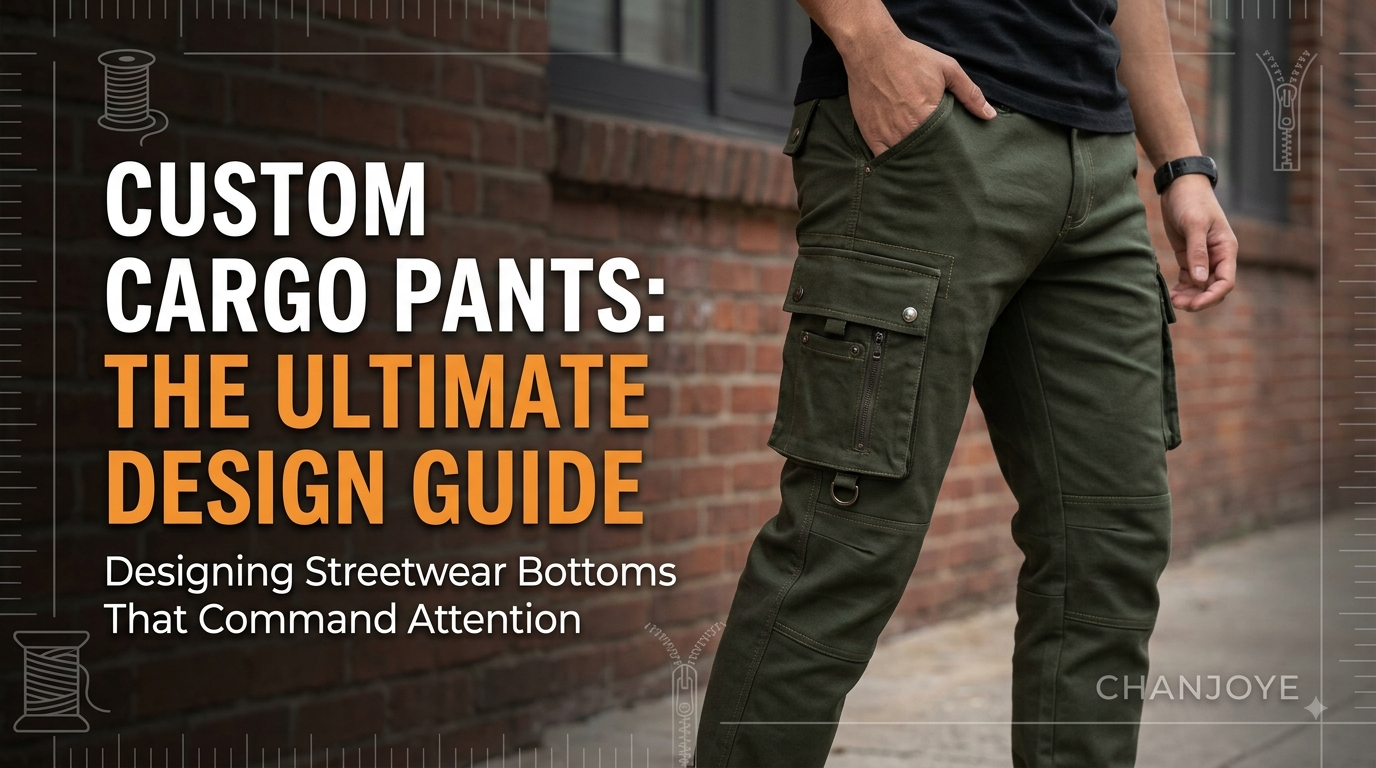
If you have been paying attention to streetwear over the past three years, you have watched cargo pants complete one of the most remarkable comebacks in contemporary fashion. What was once dismissed as purely functional military surplus has been reimagined by design houses, independent labels, and streetwear pioneers as a cornerstone silhouette — one that balances utilitarian credibility with genuine style versatility. Yet for every brand that nails the cargo pant brief, there are a dozen that miss it. Ill-considered pocket placement, cheap hardware that fails after three months, fabric that bags at the knee and sags at the seat — these are not manufacturing accidents; they are the predictable results of treating cargo pants as an afterthought rather than a design discipline. At Chanjoye, a leading high-end custom streetwear manufacturer with over 20 years of experience serving premium and luxury streetwear brands worldwide, we have seen firsthand what separates a cargo pant that sells out from one that sits in inventory. This guide distills that knowledge into a comprehensive resource for fashion entrepreneurs, buyers, and brand owners ready to design cargo pants that command attention, earn loyalty, and justify premium positioning. Cargo pants trace their origin to the British Armed Forces, who introduced them in 1938 as part of the Battle Dress uniform. The oversized side pockets were designed to carry field dressings and ammunition — pure function, zero fashion. By the 1990s, hip-hop culture had adopted the silhouette, and by the early 2000s, cargo pants were a mainstream phenomenon worn by everyone from skaters to pop stars. The current cargo renaissance, however, is different. Unlike the baggy, overly pocketed styles of the early 2000s, today's cargo pants are refined, intentional, and design-forward. According to fashion trend data tracked by leading industry analysts, the global streetwear market has expanded significantly, with utility-inspired bottom wear — including cargo pants — accounting for a growing share of consumer interest. Brands like Off-White, Fear of God, and Rhude have elevated the cargo pant from casual utility to luxury streetwear statement piece, proving that the silhouette has genuinely evolved beyond its military origins (explore wider trends at Business of Fashion). What does this mean for your brand? Simple: there has never been a better time to invest in custom cargo pants. But getting them right requires more than choosing a fabric and adding a pocket. It requires a thorough understanding of fit, construction, materials, and manufacturing partnerships. Let us break it down. Before we discuss solutions, it is worth examining why so many custom cargo pants fail in the market. The problems typically fall into four categories. Poor Fabric Choices. Many first-time buyers default to the cheapest cotton twill available, only to discover that it wrinkles excessively, fades unevenly after washing, or lacks the structural integrity to hold sharp pocket lines. Cargo pants demand fabrics with body — materials that drape cleanly without collapsing. When the fabric is wrong, even the best pocket design looks sloppy. Amateur Pocket Construction. A cargo pocket is not simply a patch sewn onto a pant leg. It requires internal structure, reinforcement at stress points, and precise alignment with the garment's vertical seam lines. Without these elements, pockets sag, gape open, or pull the fabric awkwardly — every one of which reads as "low quality" to the customer. Weak Hardware Selection. Cargo pants rely heavily on hardware: zippers, snap buttons, drawcords, D-rings. Choosing budget alternatives invariably leads to failures — zippers that jam, buttons that pop off after the third wear, drawcords that fray within weeks. For a garment positioned as durable and functional, hardware failure is brand-destroying. Inconsistent Fit Across Sizes. Grading patterns for cargo pants is more complex than for standard trousers because the pocket placement must scale proportionally. A pocket that looks balanced on a size medium may appear oversized on a size small and undersized on an XL. Without experienced pattern-making, fit inconsistency becomes a recurring customer complaint. The cumulative effect of these issues is not just returns and refunds — it is brand erosion. Every pair of poorly made cargo pants that reaches a customer teaches them one lesson: this brand cuts corners. That is a lesson no streetwear label can afford. Fit is the single most consequential design decision you will make for a cargo pant collection. The silhouette you choose communicates your brand identity more loudly than any logo, print, or colorway. Here are the primary options and what each signals to your audience. Slim / Tapered Cargo. Fitted through the thigh with a narrowing leg opening, this silhouette appeals to brands with a refined, contemporary aesthetic. It pairs well with premium sneakers and minimal outerwear. Slim cargos work particularly well for brands targeting the 22-35 demographic who want utility details without the bulk. Manufacturing consideration: slim cuts leave less room for error in pocket placement — every millimeter matters. Regular / Straight Leg Cargo. The most versatile option. A straight-leg cargo works across demographics, pairs with virtually any footwear, and offers the most forgiving fit for online shoppers — which translates to fewer returns. For brands launching their first cargo pant, a well-executed straight leg is often the safest and most commercially viable starting point. Relaxed / Loose Fit Cargo. Popularized by skate culture and 90s revival aesthetics, relaxed cargo pants prioritize comfort and drape. The wider leg allows for larger pockets and more dramatic pocket configurations. This silhouette is trending strongly among Gen-Z consumers and brands with a more casual, youth-oriented identity. Oversized / Wide Leg Cargo. An extreme version of the relaxed fit, wide-leg cargos make a bold fashion statement. They require high-quality fabric that holds its shape to avoid looking shapeless. This silhouette works best for design-forward brands comfortable taking aesthetic risks. Chanjoye's pattern-making team has developed graded blocks for all major cargo pant silhouettes, refined over two decades of manufacturing for premium streetwear clients. This means your chosen fit will translate accurately from size XS to 3XL — something that cannot be said for every factory. Explore our manufacturing capabilities on our products page. If fit is the most important decision, pocket design is the closest second. Cargo pockets are not merely decorative — they are the defining architectural feature of the garment. Get them right, and the pant looks intentional and premium. Get them wrong, and the whole piece reads as unfinished. Bellows Pockets. The classic cargo pocket, featuring expandable side gussets that allow the pocket to hold volume without distorting the pant leg. Bellows pockets require precise construction: the gusset fabric must be cut on the correct grain, the fold lines must be pressed cleanly, and the attachment stitching must be reinforced at all four corners. When executed properly, bellows pockets give cargo pants their signature three-dimensional character. Flat Patch Pockets. A more streamlined alternative, flat pockets sit flush against the leg with no expansion capability. They suit slim and tapered silhouettes where bulky bellows pockets would disrupt the clean lines. The trade-off is reduced utility — flat pockets cannot hold much beyond a phone or slim wallet. Flap vs. No-Flap Configurations. Pocket flaps add visual weight and military authenticity. They also require additional hardware (snaps or Velcro) and introduce another layer of construction complexity. Flap-less pockets read as more modern and minimal, which may better suit certain brand aesthetics. Many brands combine both — flap pockets on the main cargo compartments, open pockets for smaller utility pouches. 3D Pocket Construction. The hallmark of truly premium cargo pants. 3D pockets are constructed as separate sub-assemblies with their own structure, lining, and reinforcement, then attached to the pant leg with precision. This approach — standard at Chanjoye for all cargo pant orders — creates pockets that hold their shape even when empty and wear evenly over time. Industry standards from organizations like GOTS emphasize the importance of construction quality in premium garment manufacturing. Pocket Placement Strategy. The vertical position of cargo pockets significantly affects the visual proportion of the pant. Pockets placed too high shorten the leg visually; pockets placed too low disrupt the natural line of the thigh. As a general rule, the top edge of the cargo pocket should align approximately one-third of the way down from the crotch point to the knee, though this varies by silhouette and brand preference. Having manufactured thousands of cargo pants for brands across the style spectrum, Chanjoye can guide you through pocket specification with sample references, technical drawings, and fabric-specific recommendations. Reach out to our team to discuss your pocket design requirements. The fabric you choose determines not only how your cargo pants look but how they feel, drape, wear, and age. Here is what you need to know about the primary fabric options for custom cargo pants. Cotton Twill (280-350 GSM). The industry standard for cargo pants. Cotton twill offers a diagonal weave structure that provides natural durability, a smooth face, and excellent dye uptake. At 280-350 GSM, the fabric has enough weight to hold pocket structure while remaining comfortable for year-round wear. Heavyweight twill (350+ GSM) creates a more substantial, structured pant suited for premium positioning and fall/winter collections. Chanjoye sources OEKO-TEX certified cotton twill as standard, ensuring your cargo pants meet international safety and environmental standards (learn about OEKO-TEX certification). Ripstop Fabric. Recognizable by its distinctive grid pattern, ripstop incorporates reinforced threads at regular intervals to prevent tearing. Originally developed for military parachutes, ripstop has become a favorite in technical streetwear for its unique texture and genuine durability. Nylon-cotton ripstop blends offer the best combination of comfort and strength. Ripstop is an excellent choice for brands positioning their cargo pants as technical or performance-oriented pieces. Cotton-Nylon Blends. Adding nylon (typically 10-30%) to cotton improves abrasion resistance, reduces shrinkage, and extends garment lifespan without significantly altering the natural cotton hand feel. For cargo pants expected to withstand heavy wear — skateboarding, outdoor activity, daily urban commuting — a cotton-nylon blend delivers measurable advantages over 100% cotton. Canvas and Duck Cloth. For brands seeking a workwear-inspired aesthetic, canvas and duck cloth provide unmatched structure and a distinctly rugged character. These heavier fabrics (350-450 GSM) produce cargo pants with architectural rigidity — the kind of garment that looks better after six months of wear than it did on day one. Stretch-Enhanced Fabrics. Adding 2-5% elastane to cotton twill creates a cargo pant that moves with the wearer without sacrificing the structured appearance. This is particularly valuable for slim and tapered silhouettes where unrestricted movement is essential. The key is moderation: too much stretch, and the garment loses its shape retention; too little, and the comfort benefit is negligible. As a manufacturer with deep fabric sourcing relationships across premium textile mills, Chanjoye can provide fabric swatches, GSM specifications, and wash-test results before you commit to a production run. This transparency is part of our commitment to quality-driven manufacturing. Hardware is where many cargo pant projects quietly fail. The customer may not consciously evaluate the zipper, the snap button, or the drawcord eyelet — but they will absolutely notice when any of these components fail. Here is how to spec hardware that matches your brand's quality promise. Zippers. For fly closures and pocket closures, specify YKK or SBS zippers. YKK remains the global benchmark for zipper reliability, with an estimated market share exceeding 40% worldwide. For cargo pants, the specific zipper type matters: metal zippers add visual weight and a premium tactile experience but may feel cold against the skin; nylon coil zippers are lighter and more flexible. Chanjoye stocks both options and can advise on the right choice for your design. Snap Buttons. Cargo pocket flaps typically use snap buttons for secure closure. Spring-loaded snaps offer better long-term reliability than prong-style snaps, and premium finishes (matte black, antique brass, gunmetal) elevate the perceived value of the garment. Branded snaps — engraved or embossed with your logo — are a cost-effective way to add a signature detail that customers remember. Drawstrings and Cord Locks. Many cargo styles incorporate drawstring hems or waist adjustments. Flat drawcords with finished tips (metal or plastic aglets) resist fraying far better than round cords with raw-cut ends. Cord locks should engage firmly without requiring excessive force — test this on your samples. D-Rings and Utility Hardware. If your design includes D-rings, carabiner clips, or other utility attachments, ensure they are properly load-rated and corrosion-resistant. Decorative hardware that rusts after exposure to humidity communicates exactly the opposite message your premium brand intends. Construction quality is the invisible architecture of a great cargo pant. The customer may never examine the seam interior, but they will experience the result: a garment that holds its shape, resists blowouts, and ages gracefully rather than falling apart. Reinforced Stress Points. The crotch seam, pocket corners, and belt loop attachments are the highest-stress zones on any pair of pants. Bartack reinforcement — dense zigzag stitching applied at these points — dramatically extends garment life. At Chanjoye, bartack reinforcement is standard procedure on every cargo pant order, not an optional upgrade. Flat-Felled Seams vs. Overlock. Flat-felled seams, where the fabric edges are folded inward and stitched flat, create the cleanest interior finish and maximum seam strength. They are more labor-intensive than overlock seams but produce a visibly superior result. For premium streetwear cargo pants, flat-felled side seams and inseams are the expected standard — and Chanjoye's production lines are equipped to deliver this. Pocket Bag Construction. Every cargo pocket consists of more than the visible exterior. The internal pocket bag — usually constructed from a lighter cotton or poly-cotton lining — determines how the pocket functions. Reinforced pocket bags with bound internal seams prevent small items from catching and tearing the lining, a common failure point on lower-quality cargo pants. Waistband Engineering. A well-constructed waistband includes an internal interlining for structure, properly aligned belt loops with reinforced attachment points, and a clean finish at the center-back seam. Curved waistbands — shaped to follow the natural contour of the body — provide superior fit compared to straight-cut waistbands, though they require more skilled pattern-making and cutting. The manufacturing standards upheld by the International Organization for Standardization (ISO) provide useful reference points for quality benchmarks, and Chanjoye's production processes are aligned with these international standards at every stage. Beyond the fundamentals of fit, fabric, and construction, customization is where your cargo pants develop a unique brand signature. Here are the key customization levers available at the manufacturing stage. Garment Dyeing. Rather than using pre-dyed fabric, garment dyeing applies color to the finished pant. This technique produces a softer hand feel, a lived-in appearance, and subtle color variation that reads as intentional and premium. Garment-dyed cargo pants also age distinctively, developing individual character through wear and washing — a quality that resonates with streetwear consumers who value authenticity. Wash Treatments. Enzyme washes soften fabric and remove surface fuzz for a cleaner appearance. Stone washes create more aggressive texture and fading. Acid washes produce high-contrast effects for bolder aesthetics. Each wash treatment affects fabric hand feel, color retention, and long-term durability, and Chanjoye can produce wash samples so you can evaluate the result before committing to production. Custom Branding Integration. Woven labels, screen-printed neck labels, embroidered logos, heat-transfer graphics, and custom-printed pocket bags are all available. The key is integrating these elements without overwhelming the garment — premium streetwear tends toward subtle, well-placed branding rather than loud, all-over logo treatments. Contrast Stitching. Using a thread color that contrasts with the base fabric is an understated way to highlight construction quality and add visual interest. Contrast stitching works particularly well on cargo pants because the pocket outlines and seam lines provide natural canvas for the technique. Chanjoye's design support team can walk you through samples of each customization option, helping you select the combination that best expresses your brand vision while maintaining wearability and commercial viability. Understanding the production timeline is essential for planning your collection launch. Here is what a typical custom cargo pant production cycle looks like when working with an experienced manufacturer. Sampling Phase (2-3 Weeks). After you provide your design brief and specifications, the factory produces a fit sample. This first sample allows you to evaluate the silhouette, pocket placement, fabric hand feel, and overall construction quality. Most brands go through 1-2 rounds of sample revisions before approving the final prototype. Pre-Production Sample (1-2 Weeks). Once the design is finalized, a pre-production sample is made using the exact materials and techniques that will be used in bulk production. This is the last opportunity to catch issues before production begins. Bulk Production (3-5 Weeks). Depending on order volume and complexity, bulk production typically takes 3-5 weeks. Chanjoye offers flexible MOQ starting at 50-100 pieces per style, a service designed specifically for premium brands that need to test quality and market response before scaling — not a budget option, but a strategic manufacturing partnership for quality-focused emerging labels. Read more about MOQ strategies in our blog archive. Quality Inspection and Shipping (1-2 Weeks). Every order undergoes systematic quality inspection before packing and shipping. Our team can coordinate with your preferred logistics partners or recommend reliable freight options. A systematic QC process is the difference between consistent brand quality and unpredictable customer experiences. Here is an essential checklist covering the critical inspection points for cargo pants. This checklist reflects the inspection protocol that Chanjoye applies to every cargo pant order before it leaves our facility — one more reason why premium streetwear brands trust us with their bottom-wear production. Cargo pants are among the most technically demanding garments in a streetwear collection. They combine the fit complexity of tailored trousers with the construction demands of outerwear, plus the added challenge of multiple pocket assemblies — each of which must be individually designed, constructed, and quality-checked. Partnering with an experienced manufacturer like Chanjoye eliminates the learning curve. Our pattern-makers have developed cargo pant blocks for every major silhouette. Our production lines are configured for the specific construction requirements of pocket-heavy garments — dedicated bartack stations, experienced operators who specialize in pocket assembly, and QC procedures designed around cargo-specific failure points. Beyond technical capability, an established manufacturer brings supply chain stability. Chanjoye maintains relationships with premium fabric mills and trim suppliers, ensuring consistent material quality from your first sample to your tenth production run. For brands building long-term customer loyalty, this supply chain consistency is not optional — it is essential. We invite you to send an inquiry with your cargo pant design concept. Our team will respond with fabric recommendations, a preliminary timeline, and a transparent quotation — everything you need to make an informed decision about your manufacturing partner. Custom cargo pants represent one of the highest-impact opportunities in contemporary streetwear. Done right, they become a signature piece that customers associate with your brand — the garment they reach for when they want to look intentional without looking like they tried too hard. The path to great cargo pants runs through disciplined design decisions at every stage: silhouette selection that aligns with your brand identity, pocket engineering that balances form and function, fabric choices that deliver both hand feel and durability, hardware specification that matches your quality promise, and a manufacturing partnership that executes your vision with precision. As the streetwear landscape continues to evolve, utility-inspired design language is not going anywhere — if anything, it is becoming more sophisticated, more integrated into luxury fashion vocabulary, and more demanding of genuine manufacturing quality. Brands that invest in getting it right now will be positioned to lead as the category matures. Chanjoye has spent over two decades helping premium streetwear brands bring their designs to life with meticulous craftsmanship and superior materials. Whether you are launching your first cargo pant or adding to an existing bottom-wear collection, we have the expertise, the infrastructure, and the commitment to quality that your brand deserves. Browse our full manufacturing capabilities or contact us to start the conversation about your next collection.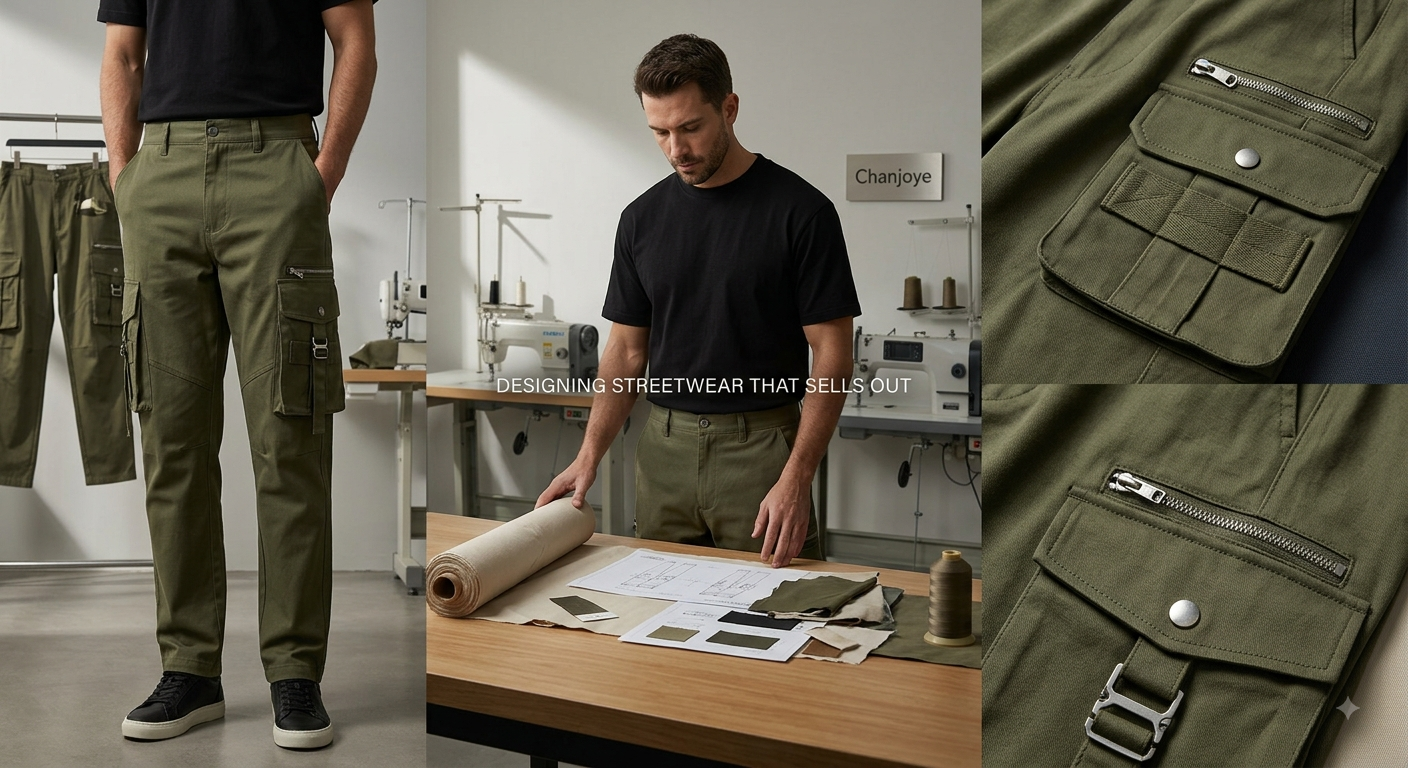
The Cargo Pant Renaissance — How Utility Became a Streetwear Essential
The Real Challenge — Why Most Custom Cargo Pants Fall Short
Mastering Cargo Pant Silhouettes — Finding the Right Fit for Your Brand
Pocket Engineering — The Make-or-Break Design Element
Fabric Selection for Premium Cargo Pants — What Separates Quality from Mediocre
Hardware and Trim — Why Every Detail Counts
Construction Techniques That Define Luxury Cargo Pants
Customization Options — From Colorways to Finishing Treatments
Production Planning — MOQ, Sampling, and Timelines
Quality Control Checklist for Custom Cargo Pants
Inspection Point
What to Check
Acceptable Standard
Fabric Quality
Color consistency, weave uniformity, hand feel
No shade variation exceeding 4.0 on gray scale
Seam Strength
All major seams including crotch and side seams
No slippage at 12 lbs tensile pull
Pocket Attachment
Bellows expansion, corner reinforcement, alignment
Bartack at all 4 corners; symmetrical placement
Zipper Function
Smooth operation, auto-lock engagement
No catching, skipping, or resistance
Snap Buttons
Secure attachment, consistent snap force
No spin, no pull-off under 15 lbs force
Bartack Integrity
All stress points including pocket corners and fly
28+ stitches per bartack, no thread breaks
Measurement Accuracy
Key measurements per size spec
Within industry tolerance (± 0.5 inch)
Label Placement
Care label, brand label, size label
Correct position, secure stitching
Overall Appearance
Full garment inspection on form
No visible defects, correct drape and silhouette
Why Partner with an Experienced Manufacturer for Your Cargo Collection
Designing Cargo Pants That Define Your Brand