Custom Coats for Winter Collections: From Sherpa to Fur, Your Complete Sourcing Guide
- Share
- publisher
- Chanjoye
- Issue Time
- Jul 31,2026
Summary
Navigate the world of custom winter coat manufacturing. From sherpa and fleece to faux fur and wool blends, learn how to source and design coats for your winter collection.
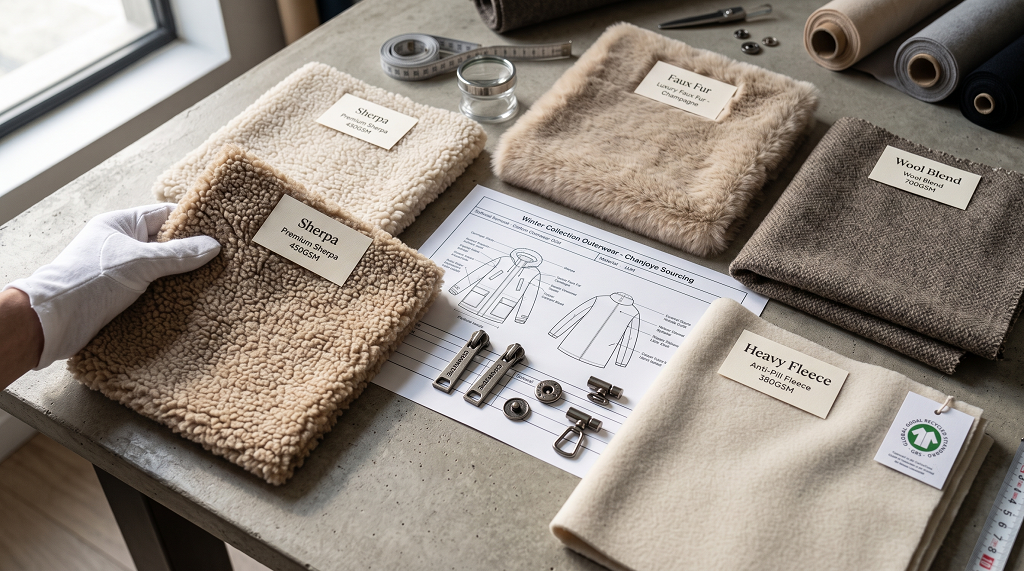
Sourcing custom coats for a winter collection is one of the most demanding challenges a fashion brand faces. Unlike lightweight tops or printed tees, a winter coat carries structural complexity, material density, and consumer expectations that leave no room for error. A poorly constructed coat with cheap insulation or weak stitching will generate returns, damage brand reputation, and erode the trust you have spent years building. Yet many emerging streetwear and fashion brands enter winter outerwear sourcing without a clear understanding of material grades, construction methods, or supplier capability assessment — and the results can be devastating. At Chanjoye, a leading high-end custom streetwear manufacturer with over 20 years of experience serving premium and luxury streetwear brands worldwide, we have guided hundreds of brands through their winter coat production journeys. This guide consolidates everything you need to know about sourcing sherpa, fleece, faux fur, and wool blend coats — from fabric fundamentals to factory selection and quality benchmarks — so you can launch your winter collection with confidence. The global outerwear market continues to expand, driven by rising consumer demand for both functional warmth and fashion-forward aesthetics. According to data from Grand View Research, the outerwear segment has maintained consistent growth as consumers increasingly view coats as statement pieces rather than purely utilitarian garments. For streetwear and contemporary fashion brands, this signals a clear opportunity: custom coats deliver higher average order values, stronger brand differentiation, and greater customer loyalty compared to basic apparel categories. Winter coats occupy a unique position in fashion retail. A well-designed coat commands premium pricing — often 3-5x the retail price of a standard hoodie — while simultaneously serving as the most visible piece in any cold-weather outfit. When a consumer invests in a coat from your brand, they wear it daily for months, creating repeated brand exposure that no t-shirt or accessory can match. This makes coat manufacturing quality absolutely non-negotiable. Brands that get winter coat sourcing right unlock a recurring seasonal revenue stream. Those that cut corners on materials or workmanship face chargebacks, negative reviews, and a damaged market position that can take multiple seasons to repair. Explore more seasonal collection strategies in our blog to build a well-rounded product lineup. Many brands that have successfully produced t-shirts, hoodies, and sweatpants encounter an entirely different level of complexity when they move to coats. The challenges multiply across three dimensions: A single coat can require shell fabric, lining, interlining, insulation fill, zippers, snaps, drawcords, and decorative trims — each sourced from different suppliers and each with its own quality specifications. Sherpa alone comes in multiple pile heights, densities, and backing materials. Unlike a t-shirt that follows a straightforward cut-and-sew process, a winter coat involves multiple sub-assemblies: collar construction, sleeve setting with proper ease, lining attachment, pocket engineering, and closure system installation. Each step requires specialized equipment and experienced operators. Maintaining consistent insulation distribution, seam strength, and fit across hundreds or thousands of units demands robust quality control systems at every production stage. A 2mm deviation in a shoulder seam becomes visually obvious on a structured coat in a way it never would on a relaxed-fit hoodie. Partnering with an experienced manufacturer eliminates these pain points before they affect your brand. Learn about Chanjoye's 20-year manufacturing heritage and how deep production expertise translates to consistent quality for your collection. Sherpa fabric — named for its visual and tactile resemblance to shearling wool — has become one of the defining textures of contemporary streetwear. Originally developed as a synthetic alternative to genuine shearling, modern sherpa is typically composed of polyester fibers brushed and sheared to create a dense, plush pile surface that delivers exceptional warmth-to-weight performance. When evaluating sherpa for custom coat production, three metrics matter most. Pile height typically ranges from 6mm to 20mm, with longer piles delivering a more luxurious hand feel but adding weight and cost. Fabric weight (GSM) for quality sherpa falls between 350-550 GSM — anything below 300 GSM will feel thin and fail to provide adequate warmth. Backing material options include knitted polyester (most common, good drape), woven polyester (more structure), and fleece-bonded (maximum warmth, heavier). Chanjoye sources premium-grade sherpa at 420-500 GSM for coats that deliver the plush feel consumers expect from high-end streetwear. Sherpa coats work exceptionally well in three design directions: full sherpa zip-through jackets for a bold textural statement, sherpa-lined denim or canvas trucker jackets for a heritage-meets-streetwear aesthetic, and sherpa-collar trim pieces that add tactile interest without the full-coverage commitment. For emerging brands, sherpa-lined styles typically offer the best entry point — they require less fabric yardage per unit while still delivering the premium feel consumers associate with the material. The faux fur market has experienced extraordinary growth, with industry analysts projecting continued double-digit CAGR as consumers increasingly demand animal-free luxury alternatives. Modern faux fur technology has advanced dramatically — today's premium faux fur is nearly indistinguishable from genuine fur in appearance, hand feel, and drape, while offering significant advantages in color consistency, pattern control, and ethical positioning. Faux fur quality varies enormously across the supply chain. The key differentiators include fiber composition (acrylic/modacrylic blends provide the most realistic simulation), pile density (measured in filaments per square inch), backing construction (knitted backings offer better drape for full-length coats, while woven backings provide more structure for shorter jackets), and color-fastness (critical for vibrant fashion colors that must not bleed or fade). Faux fur can shift dramatically in appearance under different lighting conditions. A swatch that looks perfectly champagne under showroom lighting may read as dull beige under natural daylight or overly yellow under retail LED. Always request physical swatches and evaluate them under the lighting conditions your customers will experience — daylight near a window, evening indoor light, and retail store lighting. This single precaution prevents the most common faux fur sourcing disappointment. As a manufacturer that has produced thousands of faux fur coats for premium streetwear brands, Chanjoye maintains direct relationships with top-tier faux fur textile mills, ensuring consistent pile quality and color matching across production runs. Browse our custom outerwear manufacturing capabilities to see how we bring faux fur designs from concept to finished product. Fleece outerwear has evolved far beyond its origins as basic outdoor layering. Today's fleece coats appear everywhere from high-fashion runways to limited-edition streetwear drops, valued for their exceptional warmth-to-weight ratio, packability, and compatibility with bold graphic applications including sublimation printing and embroidery. Fleece quality is primarily determined by fiber construction and fabric weight. Polar fleece (single-sided brushed) at 200-300 GSM works well for lighter transitional coats and zip-throughs. Double-sided or sherpa-bonded fleece at 350-450 GSM provides genuine winter warmth suitable for primary outerwear. Anti-pill finishes are essential — budget fleece that pills after three wears will destroy brand perception faster than almost any other quality failure. For brands targeting the premium segment, Chanjoye recommends anti-pill polar fleece at minimum 280 GSM with a smooth-faced exterior that holds print and embroidery detail beautifully. Sustainability-conscious brands should investigate recycled polyester (rPET) fleece, which delivers identical performance to virgin polyester while reducing environmental impact. Look for OEKO-TEX Standard 100 or Global Recycled Standard (GRS) certification to verify recycled content claims — the fleece supply chain has historically had transparency challenges that third-party certification resolves. Wool blend coats occupy the pinnacle of winter outerwear — they convey heritage, craftsmanship, and enduring value in a way that synthetic fabrics alone cannot. For streetwear brands looking to elevate their positioning or introduce a premium tier, a well-executed wool blend coat represents the ultimate statement piece. The wool blend ratio is the single most important specification to get right. Common constructions include 80/20 wool-polyester (classic, warm, moderate durability), 60/40 wool-polyester (lighter, more affordable, good drape), and 50/50 wool-polyester (durable, shape-retentive, value-conscious). Pure wool coats exist but are rare in streetwear due to cost and care requirements; the sweet spot for quality-conscious brands is typically 60-80% wool content with polyester providing structural stability and wrinkle resistance. Beyond the blend ratio, consider fabric weight (500-700 GSM for autumn-weight coats, 700-900 GSM for true winter weight), weave type (melton for a smooth dense finish, herringbone for texture, bouclé for fashion-forward texture), and lining material (viscose or cupro for breathability, polyester satin for durability, quilted lining for added warmth). Each combination produces a fundamentally different coat in terms of warmth, weight, drape, and price point. Choosing the right coat material for your collection requires balancing warmth, weight, cost, and brand positioning. Use this comparison table to guide your material selection: At Chanjoye, we help brands navigate these trade-offs by providing detailed material swatch kits and technical specifications before production begins, ensuring every coat in your collection aligns with both your creative vision and commercial requirements. Producing custom coats at commercial quality requires a manufacturing partner with specific capabilities that go well beyond basic cut-and-sew. Here are the critical factors to evaluate when selecting a coat manufacturer: Coats are three-dimensional garments with complex ease requirements. Shoulders must accommodate movement without collapsing. Armholes must allow layering without binding. Collar stands must roll correctly across necklines. A manufacturer with dedicated pattern engineers who understand outerwear-specific grading is non-negotiable. Coat construction frequently requires sewing through 4-6 layers of material simultaneously — shell fabric, interlining, lining, insulation, and seam tape. Standard single-needle machines cannot handle this. Verify that your manufacturer maintains walking-foot machines, cylinder-bed machines for tubular sections, and appropriate needle systems for heavy fabrics. Coat QC must happen at multiple checkpoints: incoming fabric inspection (GSM verification, color matching, shrinkage testing), inline production inspection (seam strength, stitch consistency, insulation distribution), and final AQL inspection (fit on dress forms, zipper/closure function, overall finish). A manufacturer that only inspects at the end of production is one that will ship defects. High-quality coat manufacturing traditionally demanded large minimums, but forward-thinking manufacturers now offer flexible MOQ starting at 50-100 pieces per style. This allows premium brands to test market response with a capsule collection before committing to volume. Chanjoye has built its production systems specifically to support this model — maintaining premium quality standards at quantities that make sense for growing brands. Beyond material selection, design details separate remarkable coats from forgettable ones. The most successful winter coat designs share several characteristics: Hardware selection communicates quality instantly. Custom-branded zippers, engraved snaps, and metal toggle adjusters signal attention to detail before the consumer even tries on the coat. Invest in hardware that matches your brand's positioning — matte black finishes for modern streetwear, antiqued brass for heritage aesthetics, polished gunmetal for technical minimalism. Pocket engineering is one of the most under-appreciated coat design elements. Consumers judge coat functionality within seconds of putting their hands in the pockets. Fleece-lined hand-warmer pockets, secure internal zip pockets for valuables, and properly reinforced pocket bags that won't tear under load all contribute to a premium user experience that generates repeat purchases. Lining details provide an opportunity for brand expression that many brands overlook. A custom-printed lining, a contrast satin interior, or a branded neck tape transforms the coat from generic outerwear to a branded experience. Explore our full range of custom manufacturing capabilities including bespoke lining, trim, and hardware options. Sustainability has moved from a nice-to-have to a competitive requirement in outerwear. Consumers — particularly the Millennial and Gen Z demographics that drive streetwear culture — actively seek brands that demonstrate environmental responsibility in their supply chains. For custom coat production, sustainability efforts focus on three areas. Material sourcing — recycled polyester for sherpa and fleece, organic or recycled wool blends, and bio-based faux fur alternatives reduce the environmental footprint of your collection. Manufacturing efficiency — lean production methods, fabric yield optimization, and energy-efficient facilities reduce waste throughout the production cycle. Certification transparency — Textile Exchange certifications such as GRS (Global Recycled Standard) and OCS (Organic Content Standard) provide third-party verification that your sustainability claims are genuine. Brands that communicate their sustainability efforts authentically — with specific data and verifiable certifications rather than vague claims — build deeper trust with conscious consumers and differentiate themselves in an increasingly crowded market. Contact our team to discuss sustainable material options for your winter coat collection. Standard production lead times for custom coats range from 30-60 days depending on material availability, design complexity, and order volume. Sampling typically adds 2-4 weeks. Brands should plan to begin sourcing at least 4-5 months before their intended launch date to accommodate sampling, revisions, production, and shipping. Traditional coat manufacturers often require 300-500 pieces per style. However, manufacturers serving emerging brands increasingly offer flexible MOQs of 50-100 pieces per style, sometimes with a modest per-unit surcharge for smaller quantities. Chanjoye offers flexible MOQ starting at 50-100 pieces so premium brands can test quality before scaling — positioning low minimums as a strategic advantage for quality-focused brands rather than a budget option. Consistent sizing requires a well-documented graded spec sheet that accounts for the specific wearing ease each coat style needs. A sherpa-lined coat needs more ease than an unlined fleece jacket. Work with a manufacturer that provides detailed tech packs with graded measurements for every size, and always conduct fit sampling on at least two sizes (typically M and XL) to verify grading accuracy. Yes, most manufacturers allow mixing styles within the same production run as long as the total quantity meets the required MOQ. This is a popular approach for brands launching a capsule collection — for example, ordering 30 sherpa jackets, 30 fleece zip-throughs, and 40 faux fur coats to hit a 100-piece total. Send us your requirements and our team will help structure your order for maximum flexibility. Custom winter coat manufacturing is complex, but the rewards justify the effort. A well-executed coat collection commands premium pricing, builds brand authority, and generates the kind of customer loyalty that keeps consumers coming back season after season. The key is approaching the process systematically: define your material strategy, partner with a manufacturer that has genuine outerwear expertise, invest in design details that signal quality, and maintain rigorous quality control throughout production. Chanjoye's two decades of premium streetwear manufacturing experience — spanning thousands of custom coat styles for brands across North America, Europe, and Asia-Pacific — positions us uniquely to guide your winter collection from concept to delivery. Whether you are planning a capsule of 50 sherpa-lined jackets or a full seasonal range of faux fur, fleece, and wool blend coats, our team brings the technical knowledge and production discipline that premium outerwear demands. Explore our custom outerwear manufacturing solutions and start planning your next winter collection with a partner who understands the difference between making clothes and making coats.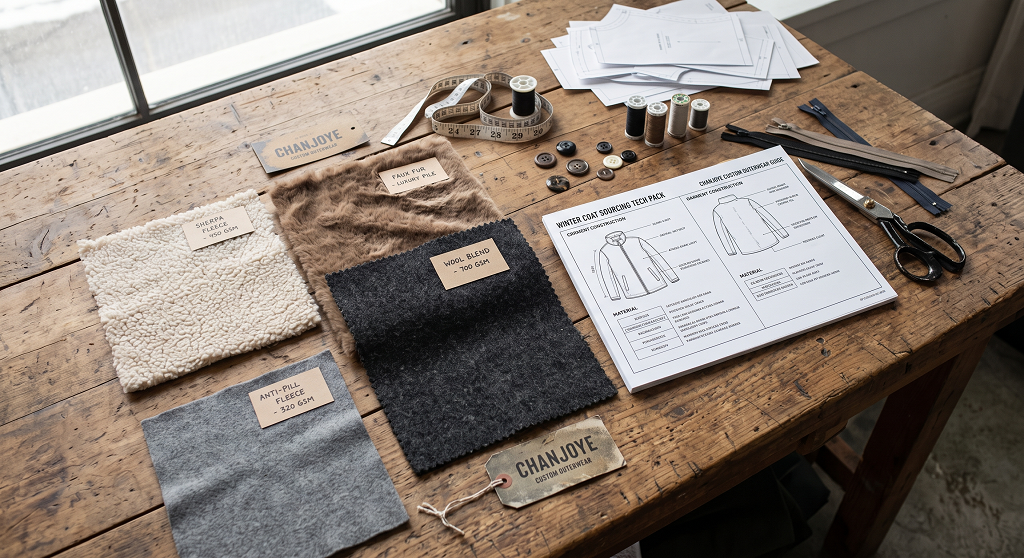
The Winter Coat Market: Why Custom Outerwear Is a Strategic Investment
Why Custom Coat Sourcing Challenges Even Experienced Brands
Material Multiplicity
Construction Complexity
Quality Consistency at Scale
Sherpa Coats: The Cozy Streetwear Staple
Key Sherpa Material Specifications
Faux Fur Coats: Luxury Aesthetics Without Compromise
Pro Sourcing Tip: Request Multi-Light Swatches
Fleece Coats: Lightweight Warmth for Active Collections
Wool Blend Coats: Timeless Sophistication
Material Comparison: Sherpa vs Faux Fur vs Fleece vs Wool Blend
Material
GSM Range
Warmth Level
Durability
Best For
Sherpa
350-550
High
Good
Statement coats, lined jackets, textural streetwear
Faux Fur
400-800+
Very High
Moderate
Luxury looks, full-length coats, fashion-forward drops
Fleece (Polar)
200-300
Moderate
Excellent
Lightweight jackets, active streetwear, printed designs
Fleece (Heavy)
350-450
High
Excellent
Winter zip-throughs, everyday outerwear, bonded styles
Wool Blend
500-900
Very High
Excellent
Premium coats, heritage styles, elevated brand positioning
Manufacturing Considerations for Custom Winter Coats
Pattern Engineering Expertise
Multi-Layer Sewing Capability
Quality Control at Every Stage
MOQ Flexibility with Quality Assurance
Design Elements That Make Custom Coats Stand Out
Sustainability in Winter Coat Manufacturing: What Brands Need to Know
Frequently Asked Questions About Custom Coat Sourcing
What is the typical production lead time for custom coats?
What MOQ should I expect for custom winter coats?
How do I ensure consistent sizing across different coat styles?
Can I mix different coat materials within a single order?
Conclusion: Building a Winter Coat Collection That Wins