Custom Jerseys for Sports Teams and Streetwear Brands: A Complete Manufacturing Guide
- Share
- publisher
- Chanjoye
- Issue Time
- Aug 14,2026
Summary
Complete guide to custom jersey manufacturing for sports teams and streetwear brands. Covers fabric technology, sublimation printing, numbering, and design best practices.
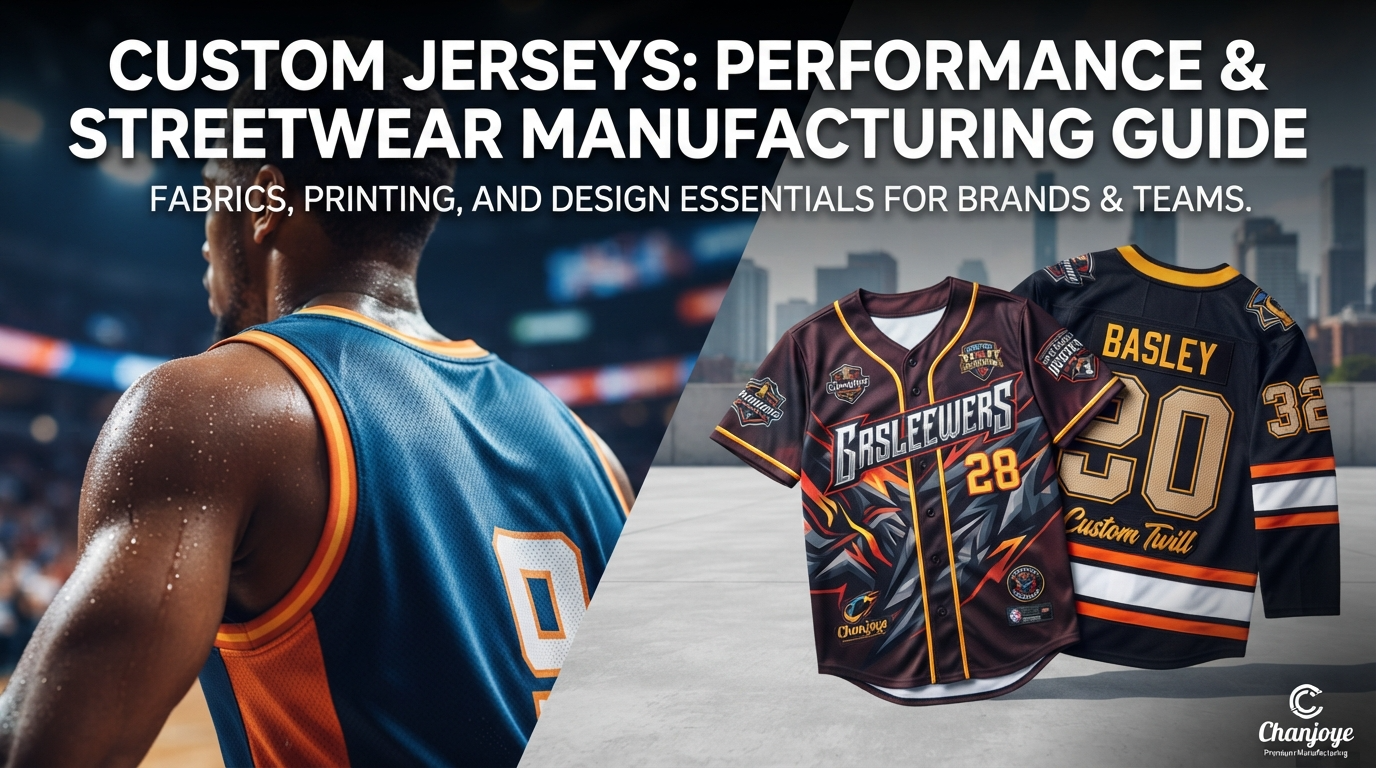
Custom jerseys sit at the intersection of two very different worlds: high-performance sportswear and expressive streetwear. On one side, teams need garments that survive hard play, dozens of washes, and seasons of heavy rotation. On the other, streetwear brands need jerseys that look premium, drape well, and hold a full-bleed graphic without cracking or fading. Getting both right at the same time is a manufacturing challenge most people underestimate. This guide walks through the complete custom jersey production process, from fabric selection and printing technology to numbering systems and sport-specific styles. Whether you are outfitting a local league, launching a branded fan collection, or building a streetwear drop around a jersey silhouette, the decisions below will determine whether your jerseys become a best-seller or a source of returns. At first glance, a jersey looks like a simple garment: a body, sleeves, and a few printed elements. In reality, it is one of the most technically demanding products in the apparel world. A well-made custom jersey must balance four competing requirements at once. Fail any one of these, and the product feels wrong immediately. A jersey with a cracked number, a logo that peels after three washes, or fabric that pills against the skin undermines the entire brand, even if every other detail is perfect. Poor jersey quality is rarely a small problem. Because jerseys are usually ordered in bulk, for a whole team, a season's worth of merchandise, or a coordinated fashion drop, a single quality defect gets multiplied across hundreds or thousands of units. The consequences stack quickly. A team that receives jerseys with fading colors or torn seams will demand a refund and never reorder. A streetwear customer who receives a jersey with a cracked graphic will post a negative review that outlives the product. Retail partners will drop a brand whose merchandise returns exceed acceptable thresholds. In short, the savings you think you are getting from a low-cost supplier are almost always paid back in returns, chargebacks, and lost repeat business. The opposite is also true: a jersey that looks and feels premium becomes a walking advertisement. Teams wear it in public, fans buy it, and customers photograph it and tag your brand. Quality in this category is not a cost, it is the single most effective marketing channel you have. The brands that succeed with custom jerseys treat manufacturing as a strategic decision, not an afterthought. They choose a partner with deep experience in performance fabrics and sublimation printing, they lock in fabric specifications before sampling, and they insist on documented quality control at every stage. This is where working with a specialized manufacturer pays off. Chanjoye, a leading high-end custom streetwear manufacturer with over 20 years of experience serving premium and luxury streetwear brands worldwide, approaches every jersey order with the same disciplines it applies to elevated streetwear: meticulous fabric selection, refined finishing, and consistent sizing across every production run. For brands that prioritize quality over cost, this manufacturing-first mindset is the difference between a jersey that sells once and one that builds a following. Fabric is the foundation of every jersey. The right material determines how the garment performs, how the print bonds, and how the final product feels. Three factors matter most. Almost all modern jerseys are made from polyester, and for good reason. Polyester is lightweight, highly durable, and naturally moisture-wicking, pulling sweat away from the skin so it can evaporate quickly. It is also the only fiber that bonds fully with sublimation dyes, which is why it dominates team sports and performance streetwear alike. GSM stands for grams per square meter and is the most reliable way to compare jersey weight. Lighter jerseys in the 120 to 150 GSM range are favored for warm-weather sports and maximum breathability, while heavyweight options in the 180 to 240 GSM range deliver a more structured, premium hand-feel that suits fashion-forward streetwear jerseys and cooler conditions. The knit structure changes everything. Mesh knits use an open, hole-punched structure for maximum airflow and are the classic choice for basketball and soccer jerseys. Interlock knits are smoother and denser, giving a premium drape ideal for streetwear. Pique knits sit in between, offering texture and moderate breathability. Working with an experienced partner like Chanjoye, which sources premium polyester knits and recycled options, ensures you get the right fabric for your intended use rather than defaulting to whatever is on hand. Tip: For premium streetwear jerseys, ask about recycled polyester options. They deliver the same performance as virgin polyester while supporting the sustainability story that increasingly drives purchase decisions. Look for fabrics certified to standards such as OEKO-TEX® STANDARD 100 or GOTS to verify safety and environmental claims. If there is one technique that defines modern jersey manufacturing, it is sublimation printing. Understanding how it works explains why it has become the default for serious teams and brands. In sublimation, heat turns solid dye into a gas that penetrates the polyester fiber and permanently bonds with it. Because the dye becomes part of the fabric rather than sitting on top of it, the result is a print that cannot crack, peel, or fade the way traditional surface prints can. Colors remain vivid through repeated washing, and the print adds virtually no weight or stiffness to the fabric, a critical advantage for athletes who need unrestricted movement. Sublimation is also the only practical way to achieve true all-over printing, where a single graphic wraps seamlessly across the entire jersey, including panels that are impossible to reach with a screen or embroidery machine. For teams that want intricate, full-bleed designs, and for streetwear brands that want a jersey to look like a single piece of art, sublimation is unmatched. The one key constraint: sublimation works best on white or light polyester fabric. Dyes are translucent, so printing on dark fabric dulls the colors. This is why the overwhelming majority of sublimated jerseys start from white base fabric, with the manufacturer printing every color, including the background, into the garment. Sublimation is the gold standard, but it is not the only option. Depending on your design and order size, other methods may be appropriate for specific elements. Most premium jerseys use a combination. A fully sublimated body paired with an embroidered crest and heat-pressed player names gives a rich, layered look that feels far more refined than a single-method garment. The right partner will advise you on which methods to combine for your specific design and positioning. Numbers and names are the most scrutinized details on any jersey. They are also the elements most likely to fail if produced incorrectly. Here is how the main options stack up. For brands positioning themselves at the premium end of the market, sublimated or twill numbering is almost always worth the investment. These are the details customers touch and inspect, and they send a strong signal about the quality of everything else. Different sports demand different jersey constructions. Knowing the differences ensures you specify the right garment for the right audience. Button-front construction, roomy fit, and a classic aesthetic. Typically paired with twill numbers and embroidered crests for a traditional look that also translates beautifully into streetwear. Sleeveless tank construction built for maximum mobility and airflow. Usually lightweight mesh in the 120 to 150 GSM range, with sublimated graphics covering the full body. Short-sleeve, athletic-cut kits designed for running. Breathable mesh panels, a deeper armhole for freedom of movement, and a comfortable round or V-neck collar. Long-sleeve, heavyweight construction that bridges sport and fashion. These are the jerseys most likely to cross over into streetwear, prized for their structured fit and bold graphic canvas. Over the past several years, jerseys have crossed from the field into mainstream fashion. Baseball and hockey jerseys in particular have become staples of streetwear collections, worn oversized and layered over hoodies. This crossover has fundamentally changed how brands should think about jersey production. A fashion jersey is not just a sports garment. It needs a heavier, more structured fabric for a premium drape, a considered fit that works oversized, and graphic treatments that read as art rather than team branding. The same sublimation technology that powers team kits now lets streetwear labels produce intricate, full-bleed designs that would have been impossible to manufacture at scale a decade ago. For labels entering this space, the opportunity is significant, but so is the competition. Brands that win are the ones that treat their jerseys as premium products, with elevated materials and refined finishing, rather than as novelty merchandise. This is exactly the kind of artisanal approach Chanjoye applies across its custom streetwear line. Even the best manufacturing cannot save a poorly prepared design. These practices will help your artwork translate cleanly into a finished garment. An experienced manufacturer will review your artwork before production and flag issues before they become expensive mistakes. This pre-production review is one of the most valuable services a quality partner can offer. Choosing a jersey manufacturer requires more than comparing quotes. Before committing to a production run, verify these essentials. This is where Chanjoye's two decades of premium manufacturing experience matter. A partner that treats quality control as a core discipline, rather than an optional step, will catch defects before they ship, protecting both your margin and your reputation. For more on what to look for in a partner, read our related manufacturing guides. Polyester is the standard for performance and sublimation jerseys because it is lightweight, durable, moisture-wicking, and bonds permanently with sublimation dyes. For premium streetwear jerseys, heavier polyester knits in the 180 to 240 GSM range deliver a more structured, elevated feel. This varies by manufacturer. Many premium manufacturers offer flexible minimum order quantities, often starting around 50 to 100 pieces, so emerging brands and smaller teams can test quality before scaling to larger production runs. No. Sublimation dyes bond to polyester, not natural fibers like cotton. For cotton or cotton-blend garments, screen printing or embroidery is required instead. Typical lead times range from a few weeks for standard orders, including sampling, production, and quality inspection. Complex all-over designs and larger volumes may take longer, so plan your production calendar accordingly. Custom jerseys reward brands that take manufacturing seriously. The right fabric, the right printing method, and rigorous quality control transform a simple garment into a product that performs on the field, photographs beautifully, and keeps customers coming back. Whether you are outfitting a competitive team or building a streetwear collection around a jersey silhouette, the principles are the same: specify premium materials, choose decoration methods that match your design, and partner with a manufacturer that treats quality as non-negotiable. Chanjoye brings 20-plus years of high-end custom apparel expertise to every order, helping brands produce jerseys that look and feel as premium as the rest of their line. Ready to start your jersey project? Send an inquiry to discuss fabrics, printing, and production timelines, or contact our team for a consultation on your next collection.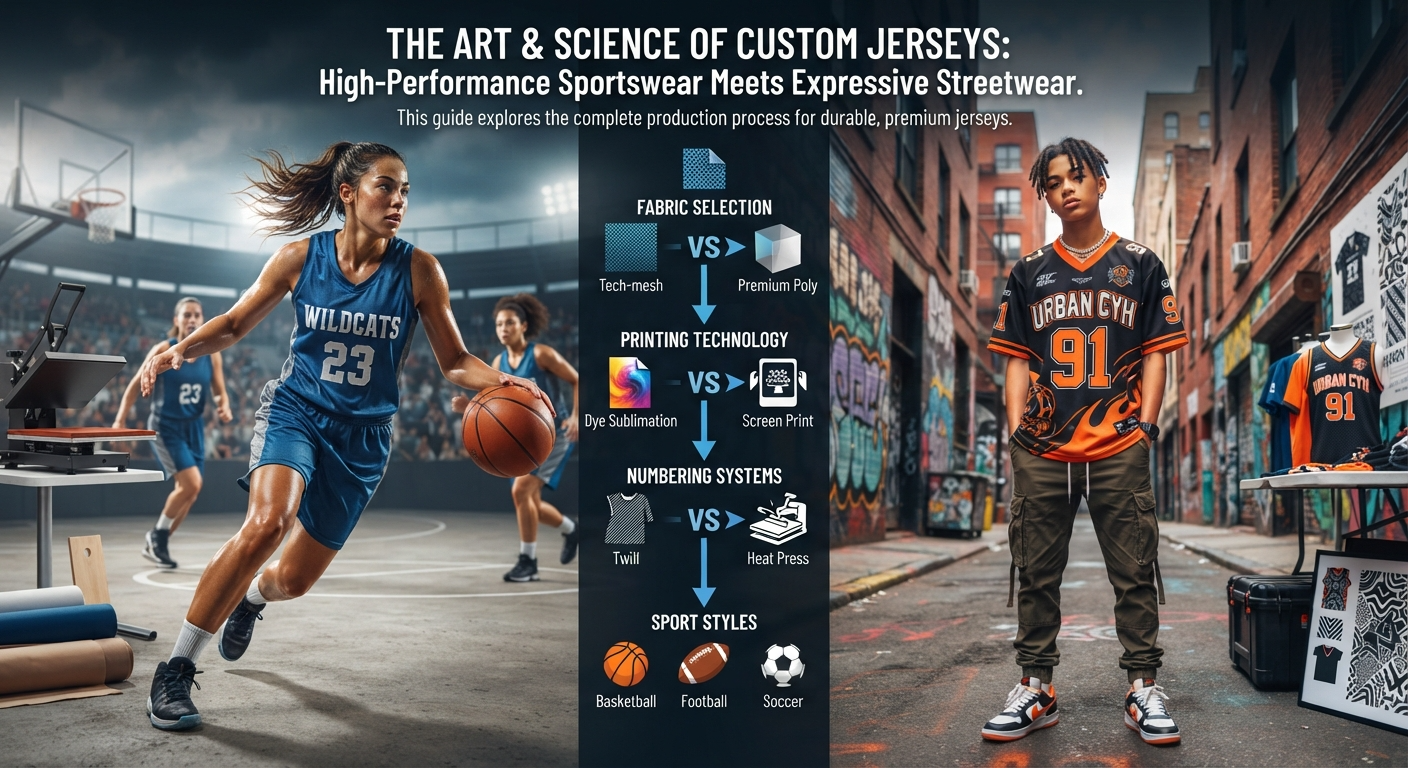
Why Custom Jerseys Are Harder to Produce Than They Look
What Happens When Jersey Quality Goes Wrong
The Solution: A Manufacturing-First Approach to Custom Jerseys
Understanding Jersey Fabrics: Polyester, Mesh, and GSM Explained
Polyester Is the Standard
Understanding GSM (Fabric Weight)
Mesh, Interlock, and Pique Knits
Sublimation Printing: The Gold Standard for Custom Jerseys
Decoration Methods Compared: Sublimation, Screen Printing, Embroidery, and Heat Transfer
Method Best For Durability Feel Sublimation Full-color, all-over designs on polyester Excellent, cannot crack or peel Weightless, smooth Screen printing Bold, limited-color logos Good, can crack over time Slight hand-feel Embroidery Premium crests and small logos Excellent, long-lasting Textured, raised Heat transfer Names, numbers, small runs Fair, may peel with heat Film-like, smooth Custom Jersey Numbering and Lettering: Options Compared
Jersey Styles by Sport: Baseball, Basketball, Soccer, and Hockey
Baseball Jerseys
Basketball Jerseys
Soccer Jerseys
Hockey & Esports Jerseys
Streetwear Jerseys: Why They Have Become a Fashion Staple
Design Best Practices for Custom Jerseys
Sourcing and Quality Control: What to Verify Before You Order
Frequently Asked Questions About Custom Jerseys
What fabric is best for custom jerseys?
How many jerseys do I need to order as a minimum?
Can I use sublimation on cotton jerseys?
How long does custom jersey production take?
Conclusion: Build Jerseys That Sell Themselves