Oversized vs Regular Fit Hoodies: Which Trend Dominates Streetwear in 2026?
- Share
- publisher
- Chanjoye
- Issue Time
- Jul 21,2026
Summary
Deep dive into the oversized vs regular fit hoodie debate. Analyze streetwear trends, consumer preferences, manufacturing considerations, and which fit drives more sales in 2026.
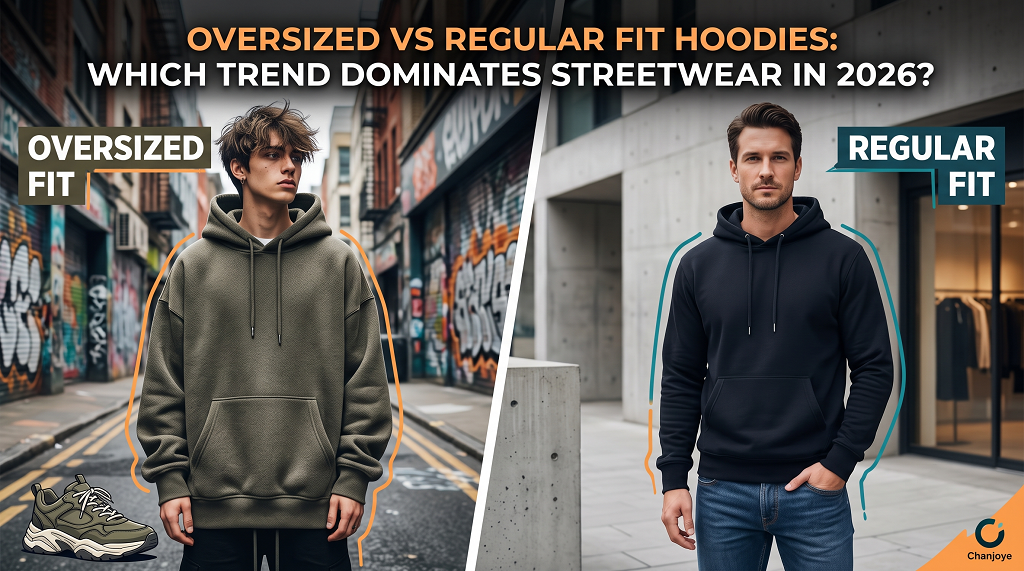
Few decisions in streetwear carry as much strategic weight as the choice between oversized and regular fit hoodies. This single design decision shapes your brand identity, manufacturing costs, target demographics, and ultimately your sell-through rates. In 2026, as the streetwear market continues to mature, understanding the nuances between these two silhouettes isn't just helpful—it's essential for any brand that wants to compete seriously. Chanjoye, a leading high-end custom streetwear manufacturer with over 20 years of experience serving premium and luxury streetwear brands worldwide, has guided hundreds of emerging and established labels through this exact decision. The insights that follow come from real-world production data, consumer behavior analysis, and the collective experience of brands that have successfully navigated this choice. The oversized hoodie didn't emerge from a fashion boardroom. Its roots trace back to skate culture of the 1990s, where loose fits provided the freedom of movement essential for technical tricks. Hip-hop artists of the same era adopted relaxed silhouettes as a cultural signature, and by the 2000s, the oversized aesthetic had been cemented as a streetwear staple. The trend gained explosive momentum in the post-2020 era. Three converging forces accelerated oversized adoption: the work-from-home revolution rewired consumer expectations around clothing comfort; the Y2K nostalgia wave brought baggy silhouettes back into the cultural spotlight; and K-pop's global ascendancy—with its signature oversized proportions—introduced millions of new consumers to the aesthetic. Visit our blog for more trend analysis and industry insights. What distinguishes this trend from passing fads is its endurance. While micro-trends like specific color waves or graphic treatments come and go within seasons, the oversized hoodie has demonstrated year-over-year staying power. On TikTok, the hashtag #OversizedHoodie has accumulated over 5 billion views with consistent month-over-month growth. According to Google Trends data, search volume for oversized hoodies has outpaced regular-fit alternatives by approximately 3:1 globally, with the gap widening each year since 2022. This isn't a temporary shift—it's a structural change in how consumers relate to hoodie proportions. Before placing a manufacturing order, every brand needs to understand precisely what distinguishes these two fits at the pattern level. These aren't marketing labels—they represent fundamentally different construction approaches. The distinction extends to how each fit interacts with the wearer's body. An oversized hoodie creates volume that the body moves within; a regular fit creates a closer relationship between garment and form. Neither is inherently superior—they serve different aesthetic and functional purposes. But choosing wrong for your target audience can mean the difference between a sell-out drop and inventory that sits. While fashion can feel subjective, consumer data paints a remarkably clear picture of where the hoodie market is heading. These figures come from analysis of publicly available search data, social media engagement metrics, and aggregated retail sales reporting from the global apparel sector. The OEKO-TEX certification data also indicates growing consumer preference for certified premium fabrics in both fit categories—a trend that aligns with the overall market movement toward quality-conscious purchasing. Fit preference isn't random—it correlates strongly with age, geography, and lifestyle. Understanding these demographic patterns allows brands to align their product strategy with their ideal customer profile. Surveys consistently show 65–75% of Gen Z consumers prefer oversized hoodies. This demographic—raised on TikTok, shaped by Y2K revival, and native to the comfort-first aesthetic—sees oversized fits not as trendy but as the baseline expectation. For brands targeting ages 16–27, oversized isn't optional; it's table stakes. Younger millennials (born 1989–1996) increasingly adopt oversized preferences alongside Gen Z, while older millennials (born 1981–1988) maintain a more balanced approach, often owning both fits for different contexts. This demographic represents the strongest market for dual-fit collections that offer both silhouettes within the same brand ecosystem. Consumers aged 45+ remain the primary market for regular fit hoodies. This demographic prioritizes fit consistency, garment versatility across casual and smart-casual settings, and silhouettes that don't read as trend-driven. However, even this segment is gradually opening to relaxed cuts as cultural norms shift. Choosing between oversized and regular fit isn't just an aesthetic decision—it carries concrete implications for your production budget, MOQ planning, and manufacturing timeline. Fabric Consumption: An oversized hoodie typically consumes 15–25% more fabric than its regular-fit equivalent. Across the body panels, sleeves, and hood, every piece is cut larger. For a 500-piece order using 400 GSM heavyweight fabric, that translates to roughly 75–125 additional meters of material. This incremental cost, however, is offset by the 15–25% price premium oversized pieces command at retail—making the cost-to-value ratio favorable for premium brands. Pattern Development: Oversized hoodies demand more sophisticated pattern engineering. The dropped shoulder angle, sleeve-to-body proportionality, and hood drape must be carefully calibrated—an improperly executed oversized hoodie reads as poor quality rather than intentional design. At Chanjoye, pattern iterations for oversized pieces typically involve two to three sampling rounds focused specifically on shoulder drop angle and body-to-sleeve ratio to achieve the precise silhouette the brand envisions. MOQ Strategy: For brands starting with low-MOQ orders (50–100 pieces), the question often arises: concentrate on one fit or split across both? The most successful first-time collections typically commit to one well-executed fit rather than splitting limited volume across two fits with incomplete size runs. Once a brand validates market fit with one silhouette, expanding to the other becomes a natural second-phase strategy. Browse our product catalog to explore hoodie options across both fit categories. The interaction between fabric weight and fit choice is one of the most important—and most frequently overlooked—considerations in hoodie design. GSM (grams per square meter) dramatically affects how each fit drapes, feels, and photographs. The gold standard for premium streetwear. At 400+ GSM, oversized hoodies achieve architectural drape with natural folds that add visual depth. Regular fit versions provide exceptional warmth and structure but can feel restrictive. Chanjoye recommends 420–450 GSM for flagship oversized pieces and 380–400 GSM for premium regular-fit options. The versatile workhorse range. A 320 GSM oversized hoodie performs well across seasons and geographies—from Los Angeles to London—while 280–300 GSM regular-fit hoodies offer year-round comfort. This GSM band is particularly popular for brands serving markets with varied climates. Best suited for oversized cuts where extra fabric volume compensates for lighter weight, creating a breezy, relaxed aesthetic popular for spring and summer drops. In regular fit, fabrics below 260 GSM risk looking thin and unstructured. For premium positioning, 100% combed organic cotton at heavyweight GSM with enzyme wash treatment represents the pinnacle of hoodie quality. Certifications matter too. Fabrics certified by organizations like the Global Organic Textile Standard (GOTS) provide consumers with assurance about both quality and ethical production—a dual value proposition that resonates strongly with the modern streetwear audience. A hoodie's true value to consumers isn't its shelf appeal—it's how many different ways it can be worn. This cost-per-wear calculus increasingly influences purchasing decisions, and it varies significantly by fit. Oversized Styling Range: The oversized hoodie functions as an outfit anchor, worn as a dress-like piece with biker shorts or leggings, layered under blazers and varsity jackets for high-low contrast, paired with wide-leg pants for full-volume streetwear, or worn over slim-fit bottoms for deliberate proportion play. Its strength lies in making a statement independent of other pieces. Regular Fit Styling Range: The regular fit excels as a versatile layer—worn under denim jackets and bombers without bulk, paired with virtually any bottom, easily dressed up under a blazer for smart-casual environments, and functioning as an effective mid-layer in cold-weather systems. Its strength is versatility through subtlety. For consumers who wear hoodies as daily staples across varied settings, the regular fit often wins on pure cost-per-wear. For consumers who treat each outfit as a fashion statement, the oversized fit delivers more impact per wear. The ideal strategy for many brands—including those working with Chanjoye—is to offer both, creating a natural good-better-best progression within the collection. Reach out through our contact page to discuss which fit strategy best suits your brand. Consumer hoodie preferences aren't static throughout the year. Seasonality, climate, and drop timing all influence which fit performs better in a given window. In fall and winter collections (September–February), heavyweight oversized hoodies dominate in colder markets, where the extra fabric volume traps more body heat and layers naturally under oversized outerwear. The oversized puffer-jacket-and-hoodie combination has become a signature cold-weather streetwear look, particularly in Northeast Asia and Northern Europe. Spring collections (March–May) see a shift toward midweight options in both fits, with oversized styles transitioning to lighter GSM fabrics that maintain silhouette without overheating. This is also when cropped oversized hoodies see their strongest seasonal demand. Summer drops (June–August) favor lightweight oversized hoodies in 220–260 GSM for cool evening wear and air-conditioned indoor environments, plus regular fit hoodies in similar weights for consumers who prioritize a cleaner summer profile. The seasonal calendar should inform not just which fit you produce but when you drop it. A 450 GSM oversized hoodie launched in July will face headwinds that the same piece launched in October would not. The data points clearly toward oversized as the growth category, but that doesn't make it the right choice for every brand. Here is how to evaluate the decision for your specific situation. Choose oversized as your primary fit if: your target demographic is under 30; your brand aesthetic is rooted in contemporary streetwear, skate culture, or fashion-forward casual; you want to command premium price points; and you're launching with a focused collection where each piece must make a visual statement. Choose regular fit as your primary fit if: your demographic spans 30+ consumers; your brand bridges casual and smart-casual; you're building basics-first collections emphasizing longevity over trend; and your distribution includes channels where extreme silhouettes may limit placement. Choose both if: you have the volume to support split MOQs across two fits; you want to create a classic-to-premium progression within your collection; and your customer base spans multiple age segments. The most successful Chanjoye clients typically introduce regular-fit core pieces in their initial drops, then layer in oversized statement pieces in subsequent collections—building brand credibility with accessible silhouettes before expanding into higher-impact territory. Ready to start your hoodie collection? Send an inquiry to discuss your specific requirements with our product team. Regardless of which fit you choose, the critical factor is intentionality. Your customers can tell the difference between a fit that was strategically chosen and one that was simply defaulted into. Every successful hoodie collection starts with a clear answer to one question: what silhouette does this brand stand for? Yes, but it requires separate patterns and typically separate cutting runs. Most manufacturers—including Chanjoye—support mixed-fit orders within the same production batch, though each fit may need to meet its own minimum order quantity. Discuss your requirements during the quoting phase to ensure feasibility. Regular fit hoodies generally have higher return rates related to sizing issues, as consumers have more specific expectations about how a regular fit should conform to their body. Oversized hoodies, by design, are more forgiving of size variation and tend to have lower fit-related return rates. Clear size charts with detailed measurements significantly reduce returns for both fits. Go beyond standard chest measurements. Include shoulder drop distance, body length, and sleeve width in your size charts. Use on-model photography that clearly demonstrates the intended silhouette. Language like intentionally oversized or relaxed, dropped-shoulder fit helps set accurate expectations and reduces returns. Yes, due to higher fabric consumption (typically 15–25% more material). However, this cost increase is usually offset by the higher retail price oversized pieces command in the market. The net margin on an oversized hoodie often exceeds that of its regular-fit equivalent when both are priced appropriately for their market positioning.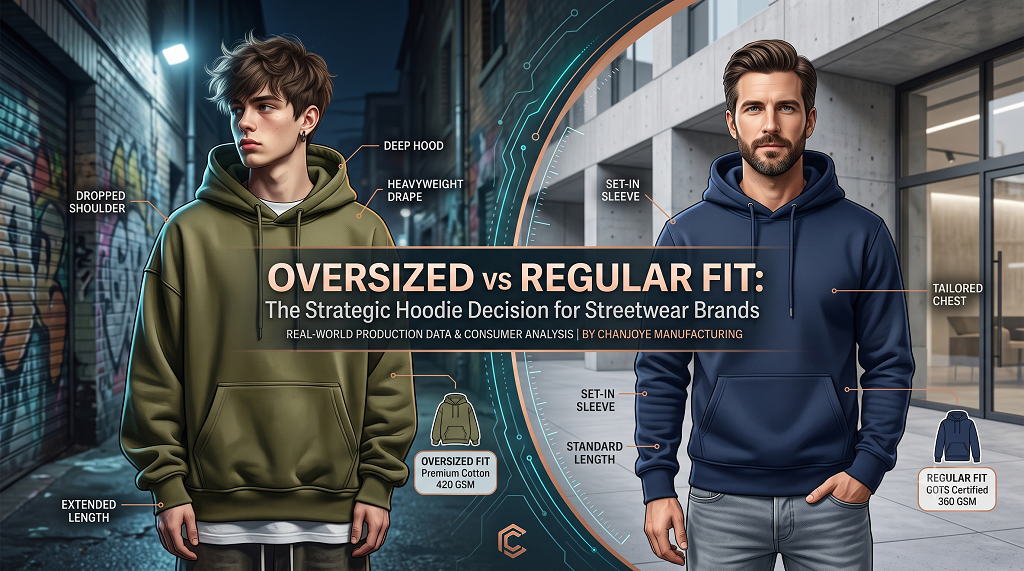
The Oversized Revolution: How Baggy Became Streetwear's Dominant Silhouette
Oversized vs Regular Fit: Defining the Technical Differences
Oversized Fit Specifications
Regular Fit Specifications
By the Numbers: What Consumer Data Reveals About Hoodie Fit Preferences in 2026
Who Buys What: Demographics Driving Each Fit Category
Gen Z (Born 1997–2012): The Oversized Generation
Millennials (Born 1981–1996): The Split Market
Gen X and Beyond: Regular Fit Stronghold
Behind the Seams: How Fit Choice Impacts Manufacturing and Costs
Fabric Weight and GSM: The Critical Variable Most Brands Overlook
Heavyweight
380–450 GSMMidweight
280–350 GSMLightweight
200–260 GSMStyling Versatility: Which Fit Earns More Cost-Per-Wear Value
Seasonal Performance: How Fit Preferences Shift Across the Calendar
Making the Smart Choice: How to Select the Right Fit for Your Brand
Frequently Asked Questions About Hoodie Fit Selection
Can I order both oversized and regular fit hoodies in a single manufacturing run?
Which fit has a higher return rate in e-commerce?
How do I communicate oversized fit sizing to customers?
Does an oversized hoodie always cost more to manufacture?