Top 10 Things to Prepare Before Sending Your Streetwear Design to a Clothing Manufacturer
- Share
- publisher
- 11
- Issue Time
- Nov 10,2026
Summary
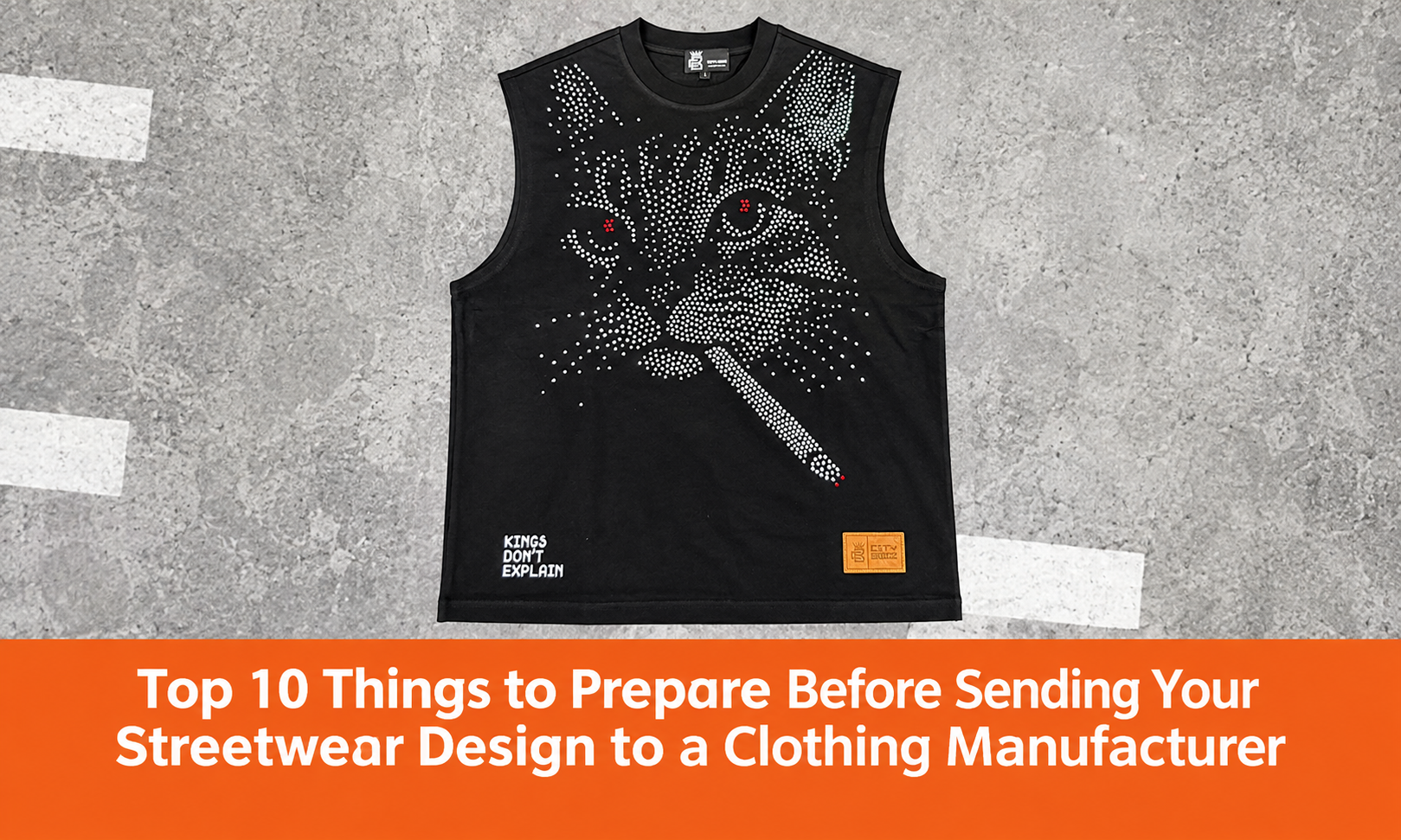
Preparing streetwear artwork for manufacturing involves more than sending a design image. This guide covers 10 essential steps, including artwork files, graphic placement, color standards, tech packs, printing and embroidery techniques, fabric compatibility, sample approval, and quality control. Learn how to communicate effectively with clothing manufacturers and turn creative ideas into high-quality custom streetwear.
Introduction: Why Great Designs Still Need a Professional Clothing Manufacturer
In today's global streetwear market, original designs have become an important factor in helping fashion brands establish a distinctive identity.
For a streetwear label, a recognizable graphic, a uniquely structured hoodie, or a jacket combining multiple decorative techniques can become one of the most valuable products in its collection.
However, many fashion brands encounter a common challenge during product development: the garment produced by a factory does not always look exactly like the original design displayed on a computer screen.
A graphic that looks sophisticated digitally may lose detail during printing. Colors may appear different on actual fabric, and the placement of a logo may not match the designer's expectations.
A carefully designed embroidered logo may also look different after production because of stitch density, fabric stretch, thread selection, and embroidery techniques.
These challenges are particularly important for oversized T-shirts, heavyweight hoodies, vintage-washed sweatshirts, varsity jackets, and custom streetwear pants.
Preparing artwork for manufacturing is therefore not simply a matter of using the correct design software. It involves fabric properties, garment patterns, production equipment, printing techniques, embroidery methods, and factory quality management.
Before sending artwork to a clothing factory, brands should prepare the necessary design files, technical specifications, and production instructions.
A professional clothing manufacturer should do more than receive an image and reproduce it. A capable manufacturer should understand the design concept, evaluate production feasibility, recommend suitable techniques, develop samples, and maintain quality throughout bulk manufacturing.
For international streetwear brands, choosing an experienced streetwear clothing manufacturer can reduce production errors, improve communication, and help ensure that finished garments meet the brand's expectations.
This guide explains ten essential preparations from the perspective of actual apparel manufacturing.
1.Preparing Artwork Files and Production Documents
1. Prepare Complete Original Artwork Files, Not Just an Image
Artwork files are the starting point of clothing production and one of the most important ways for manufacturers to understand a brand's creative requirements.
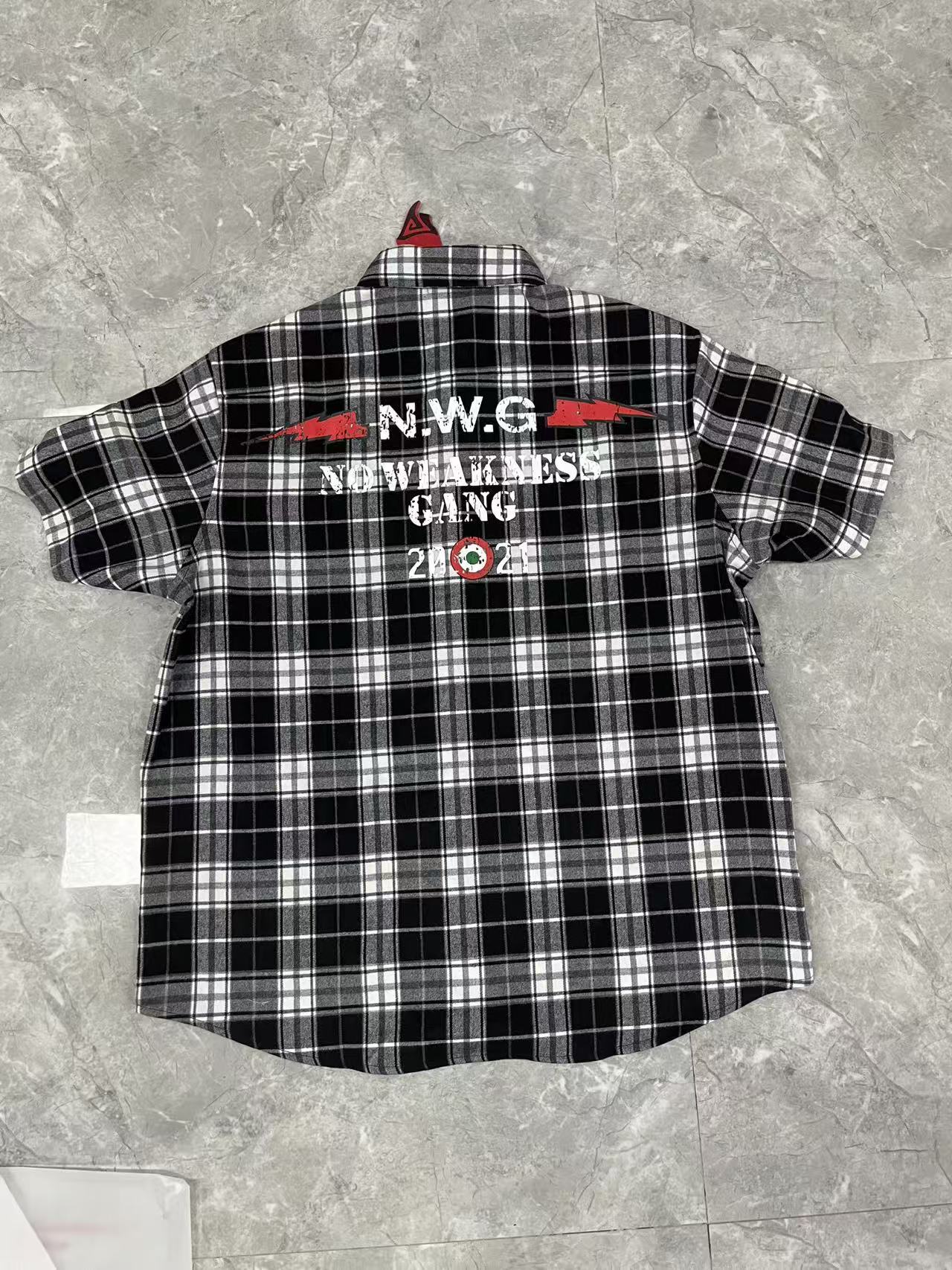
When contacting a clothing factory for the first time, many brands only provide a screenshot, a social media image, or a simple product mockup.They assume that if the factory can understand the design visually, production can begin immediately.In practice, this approach often creates unnecessary communication problems.For example, a compressed JPG image may display the general appearance of a graphic, but it may not contain sufficiently clear edges, editable layers, accurate color information, or adjustable text elements.
When a manufacturer needs to resize the graphic, modify individual colors, or prepare different artwork sizes, a low-quality image may not provide enough information.Brands should therefore prepare two types of files.
First: Editable original design files.
Common formats include:
- AI: Adobe Illustrator vector artwork.
- PSD: Adobe Photoshop layered design files.
- SVG: Scalable vector graphics.
- EPS: A commonly used vector graphics exchange format.
Second: Production export files.
Depending on the manufacturing technique, brands may prepare:
- PDF: For design documents, technical instructions, and production handoffs.
- PNG: Suitable for certain digital printing workflows requiring transparent backgrounds.
- TIFF: Used in selected high-quality image workflows.
- High-resolution JPG: Useful for visual references, but not necessarily a replacement for the original design file.
It is important to understand that AI, PDF, and PNG are simply file formats. Their existence does not automatically mean that artwork is production-ready.
Manufacturers still need to evaluate graphic dimensions, image clarity, color requirements, and compatibility with the selected production process.
Why should brands keep their original design files?
Because future product development may require adjustments to garment colors, graphic placements, sizes, or the application of existing artwork to additional product categories.
If a brand only keeps a flattened image, future modifications may require the entire design to be recreated, increasing development time and communication costs.
Professional clothing manufacturers should also check whether submitted files are complete and whether fonts, linked images, or editable layers are missing.
Before production begins, brands should establish a consistent artwork handoff system so that designers and manufacturers work with the same information.
2. Specify Actual Graphic Dimensions, Placement, and Garment Proportions
The size of a graphic displayed on a computer screen is not necessarily its actual size on a finished garment.
This is one of the most frequently overlooked details in streetwear manufacturing.
For example, a designer may create a large back graphic on an oversized T-shirt mockup. However, if the actual width and height are not specified, the manufacturer may have to estimate the dimensions based on the visual reference.Different factories and designers may interpret "large back print" differently.This can result in graphics that are too large, too small, too high, or too low.
Brands should clearly specify:
- Actual graphic width.
- Actual graphic height.
- Exact garment placement.
- Distance from the neckline, shoulder seam, or another measurement reference.
- Whether placement should change across different sizes.
- Whether the graphic overlaps pockets, seams, or other garment construction details.
For example, a front chest graphic on an oversized hoodie could be specified as follows:
The graphic should measure 20 cm wide and 15 cm high, positioned along the center front line, with its top edge 8 cm below the agreed neckline reference point.
These measurements are illustrative only. Actual specifications should be developed according to the garment pattern and approved sample.
For oversized products, brands should pay particular attention to shoulder positions, garment length, and chest proportions.
The same graphic may look completely different on a regular-fit T-shirt and an oversized T-shirt.
For multiple garment sizes, manufacturers should also confirm whether the same graphic dimensions will be used for every size or whether graded artwork dimensions are required.
A professional clothing manufacturer should be able to evaluate graphic placement according to the actual garment pattern and recommend adjustments during sample development.
3. Establish Clear Color Standards to Avoid Differences Between Artwork and Finished Garments
Color is one of the most important elements of streetwear design.
For brands with a distinctive visual identity, logo colors, graphic colors, and garment base colors often need to remain consistent across different collections.However, colors displayed on a computer monitor cannot guarantee identical results during actual clothing production.For example, the same digital color value may appear differently on white cotton, black fleece, nylon fabric, and embroidery thread.This is influenced by fabric color, material composition, absorption, surface texture, and manufacturing techniques.
Brands should therefore provide more than a colored image when communicating production requirements.
Common color communication methods include:
- Pantone color references.
- RGB color values.
- CMYK color references.
- Physical fabric color swatches.
- Physical printing or embroidery references.
Pantone or another mutually agreed physical color standard can help brands and manufacturers establish a more consistent reference.
However, a color code alone cannot guarantee identical results across different materials and production processes.Printing, embroidery, metallic decorations, and different fabrics may reproduce the same reference color differently.
For example, if a black heavyweight hoodie requires a metallic silver chest logo, the manufacturer needs to consider how the silver ink will appear on the dark fabric.If the brand chooses silver embroidery thread instead, the final texture and visual effect will be different.Before bulk manufacturing, brands should therefore request actual production samples and approve colors under suitable lighting conditions.For brands requiring repeated production, keeping approved physical color references and manufacturing records can help manufacturers reproduce products more consistently in future orders.
4. Create a Complete Clothing Technical Pack
If a design drawing communicates what a garment should look like, a technical pack, commonly called a Tech Pack, provides the manufacturing instructions needed to produce it accurately.Many fashion entrepreneurs prepare only a front and back product image without detailed production information.This leaves manufacturers without clear instructions regarding fabrics, patterns, measurements, accessories, and manufacturing techniques.A complete clothing Tech Pack should generally include the following information.
Basic Product Information:
- Brand name.
- Product name.
- Style number.
- Collection or season.
- Design revision number.
Fabric and Material Information:
- Fabric composition.
- Fabric GSM.
- Fabric colors.
- Fabric construction.
- Ribbing, lining, and accessory requirements.
Measurements and Fit Information:
- Size charts.
- Shoulder width, chest, garment length, and sleeve length.
- Neckline, cuffs, and hem measurements.
- Fit references.
- Measurement tolerances.
Manufacturing and Decoration Information:
- Printing placement.
- Embroidery placement.
- Artwork dimensions.
- Printing colors.
- Embroidery thread colors.
- Washing and distressing requirements.
- Special garment construction and panel details.
Packaging Information:
- Brand labels.
- Hangtags.
- Care labels.
- Packaging bags.
- Carton packing requirements.
For a custom hoodie, the Tech Pack may also include hood construction, drawstrings, kangaroo pocket specifications, shoulder construction, rib specifications, and special sewing requirements.
When multiple decoration techniques are involved, each process should have its own clear instructions.For example, a hoodie may feature flat embroidery on the chest, screen printing on the back, and a custom woven label on the sleeve.
With this information, the manufacturer can evaluate technical difficulty, material requirements, and manufacturing costs more accurately.A Tech Pack is not only a production document. It is also an important tool for maintaining product consistency.When brands introduce additional colors or develop similar styles, the same technical information can serve as a reliable manufacturing reference.Every garment style should therefore have its own technical pack, with consistent style numbers and revision records linked to sample approvals and purchase orders.
2.Preparing Printing and Embroidery Techniques
5. Choose the Right Printing Technique for Your Design
Printing is one of the most common decoration methods in streetwear manufacturing.From simple chest logos to complex back illustrations and oversized graphic designs, different artwork styles may require different printing techniques.If brands do not identify their preferred printing methods before production, manufacturers may struggle to evaluate costs and final product effects accurately.
Below are several commonly used streetwear printing techniques.
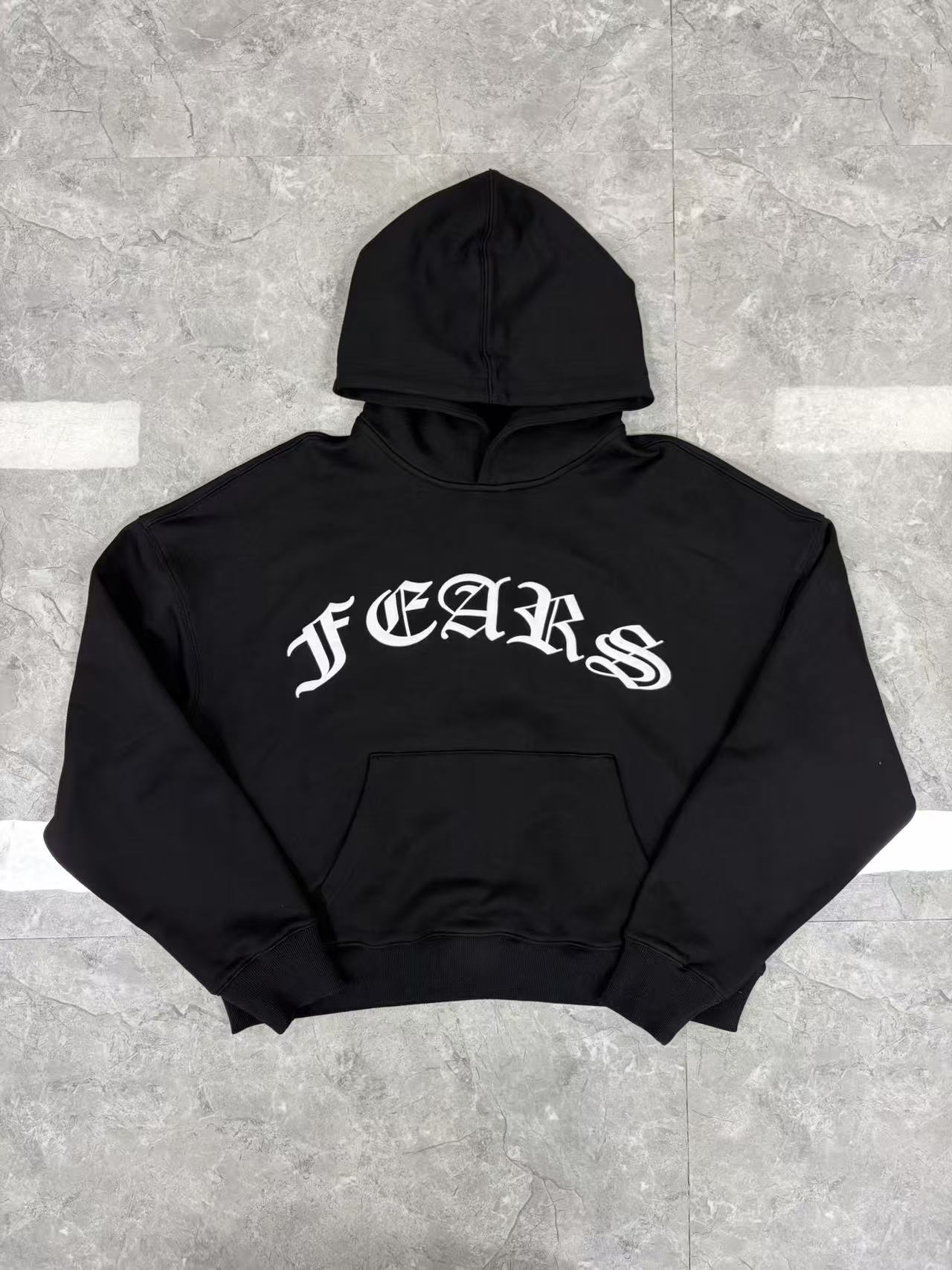
1.Screen Printing:Screen printing is suitable for many basic graphics, brand logos, typography, and larger graphic applications.It can provide good coverage on suitable fabrics and is often used for bulk garment production.However, designs containing numerous colors, complicated gradients, or extremely fine details may require additional technical evaluation.Brands should provide clean artwork files and communicate the intended visual appearance.
2.Puff Printing:Puff printing creates a raised visual and tactile effect.
This technique is commonly used on streetwear hoodies, T-shirts, and other fashion garments.For example, a heavyweight hoodie may feature a raised chest logo combined with a conventional screen-printed back graphic to create different visual textures.However, expanding puff ink can affect the original edges and fine details of artwork.Very small lettering and complicated line designs may therefore require simplification.
3.Direct-to-Garment Printing (DTG):DTG printing is suitable for artwork containing multiple colors, illustrations, and gradient effects.Compared with certain conventional printing methods, DTG can provide greater flexibility when reproducing complex imagery.However, actual results still depend on fabric composition, garment color, pretreatment, printing equipment, and artwork quality.
4.Heat Transfer Printing:Heat transfer printing can be used for different garment graphics and decorative applications.Its suitability depends on the transfer material, fabric composition, temperature, pressure, and the specific production process.
How should brands choose?
Do not select a printing technique based only on a digital mockup.
Send the artwork to a professional clothing manufacturer and ask the production team to evaluate the design according to graphic complexity, fabric, quantity, budget, and desired hand feel.For special visual effects, always request an actual decorated sample before proceeding with bulk production.
6. Prepare Embroidery Artwork for Machine Production
Embroidery adds texture, dimension, and a premium decorative appearance to streetwear products.
Compared with conventional printing, embroidery creates a more distinctive surface through thread texture and stitch construction.
Many streetwear brands use embroidery on chest logos, sleeves, caps, jacket backs, and selected areas of pants.
However, embroidery artwork cannot simply be sent to a machine without additional preparation.
Embroidery requires digitizing.
This process converts the original artwork into machine-readable stitch instructions.
The digitizing process determines stitch types, directions, density, underlay, and sequencing according to fabric properties, thread selection, garment construction, and graphic dimensions.
For example, a very small text logo may become unclear or distorted if the original design is used without adjustment.
The manufacturer may need to simplify certain details based on the artwork size and fabric characteristics.
Common embroidery techniques include:
- Flat Embroidery.
- 3D Puff Embroidery.
- Appliqué Embroidery.
- Chenille Embroidery.
- Mixed Embroidery.
Each method creates a different appearance.
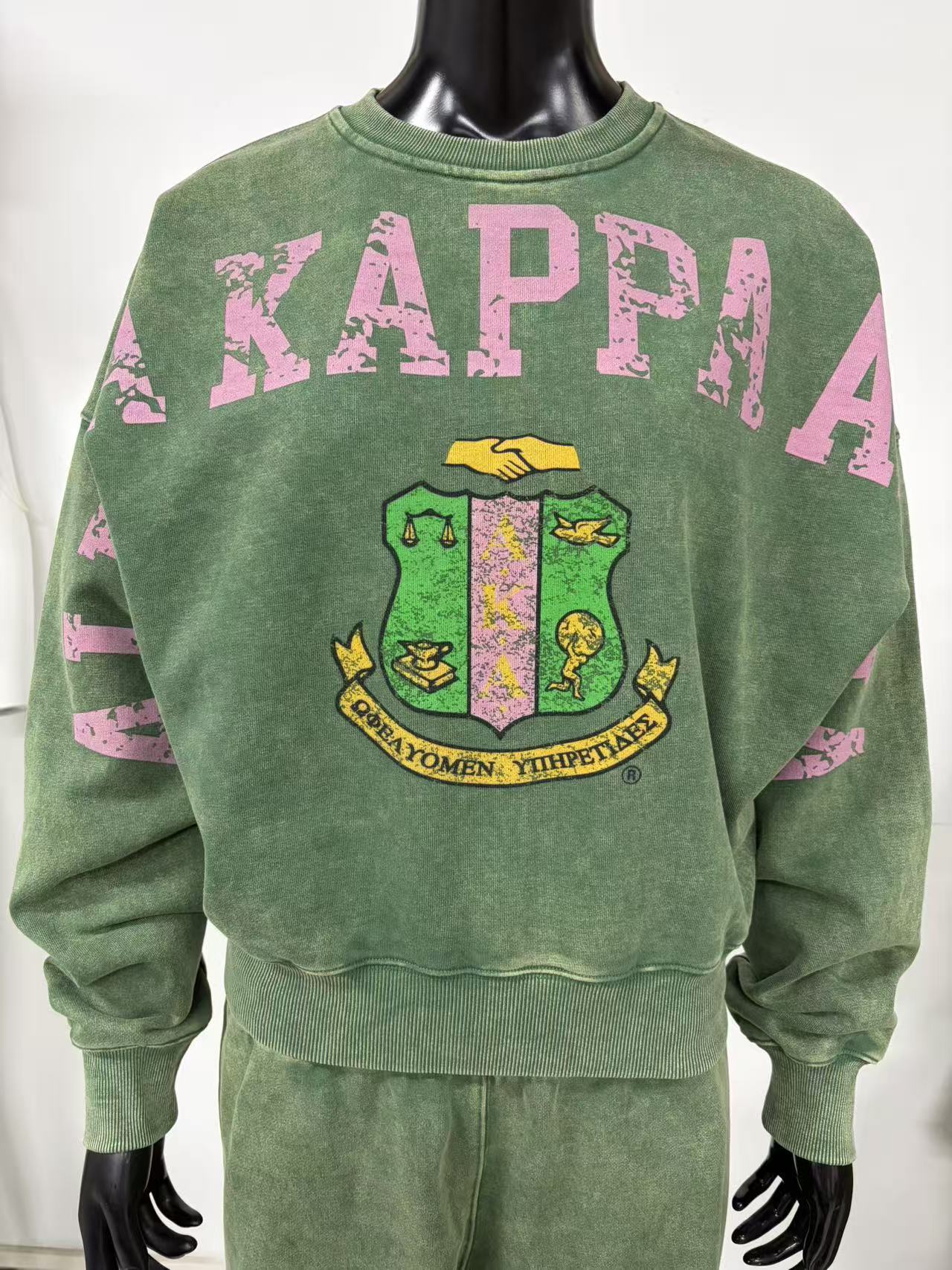
For example, 3D puff embroidery can create raised logos and lettering, while appliqué embroidery combines different fabric materials to achieve a layered visual effect.
Streetwear brands should also consider garment construction when choosing embroidery placement.
If the design is located near pockets, seams, elastic areas, or lightweight fabric sections, manufacturers need to evaluate whether the selected embroidery process is suitable.
Brands should provide clear original artwork, finished dimensions, fabric information, and thread color references.
They should also request an embroidery sample before bulk production.
After checking stitch coverage, edge definition, thread colors, and comfort on the reverse side, the brand can approve the final embroidery specification.
7. Specify Special Decoration Techniques and Their Manufacturing Requirements
As streetwear design becomes more personalized, special decoration techniques are increasingly important in product development.
In addition to conventional printing and embroidery, some brands use rhinestones, foil effects, flocking, distressed finishing, panel construction, and specialized garment washing.
These techniques can improve visual appeal, but they also introduce additional manufacturing requirements.
Rhinestone Decoration:Rhinestone applications can be used for logos, lettering, and decorative graphics.
Brands should specify stone positions, sizes, colors, and arrangement requirements.For complicated designs, provide clear artwork references and allow the manufacturer to develop a production-friendly layout.
Foil Printing:Foil printing creates distinctive metallic visual effects.Before production, brands and manufacturers should confirm fabric compatibility, color requirements, coverage, and actual adhesion results.
Flocking:Flocking creates a soft, raised surface that resembles a velvet-like texture.It is commonly used for selected lettering, logos, and decorative graphics.
Distressed Finishing:Distressed finishing can create vintage or street-inspired appearances through abrasion, fading, and localized wear.Brands should clearly communicate the desired effect and confirm the actual result through sample development.
Garment Washing:Garment washing affects more than garment color. It can also change hand feel, measurements, and printing performance.
If a product combines printing with specialized washing, the manufacturer should test whether the graphic can withstand the intended washing process.
For complicated combinations of decoration techniques, manufacturers should develop process samples before completing the full garment sample.
This helps identify potential problems early and reduces unnecessary rework during bulk production.
8. Adjust Artwork According to Garment Fit and Fabric Properties
Whether a design is suitable for manufacturing depends not only on the artwork itself but also on its relationship with the garment pattern and fabric.
For example, a regular-fit T-shirt and an oversized drop-shoulder T-shirt may display the same graphic in completely different proportions.
For oversized streetwear products, brands should pay particular attention to:
- Shoulder positioning.
- Chest proportions.
- Garment length.
- Sleeve length.
- The relationship between artwork and the garment centerline.
- Distance between graphics, pockets, and seams.
If a graphic is positioned close to the shoulder or side seam, its appearance may change across different garment sizes.
Manufacturers should therefore review artwork placement against the actual measurement chart and determine whether adjustments are required.
Fabric properties are equally important.
For example, heavyweight cotton fleece generally has a more substantial structure and may be suitable for certain large graphics and raised decorative techniques.
Stretch fabrics may require additional consideration because graphics can change appearance when the garment is stretched.
Nylon jackets also have different surface characteristics from conventional cotton garments. Brands should not assume that every printing process will produce identical results on both materials.
Furthermore, washing and distressing may change garment color, measurements, and surface properties.
If a brand plans to print a garment before washing, the manufacturer must confirm whether the selected printing method can withstand the subsequent treatment.
A professional clothing manufacturer should act as a technical partner between design and production.
Brands provide the creative direction and intended appearance, while manufacturers evaluate fabric, equipment, and production processes to recommend workable solutions.
This cooperation helps prevent avoidable manufacturing problems.
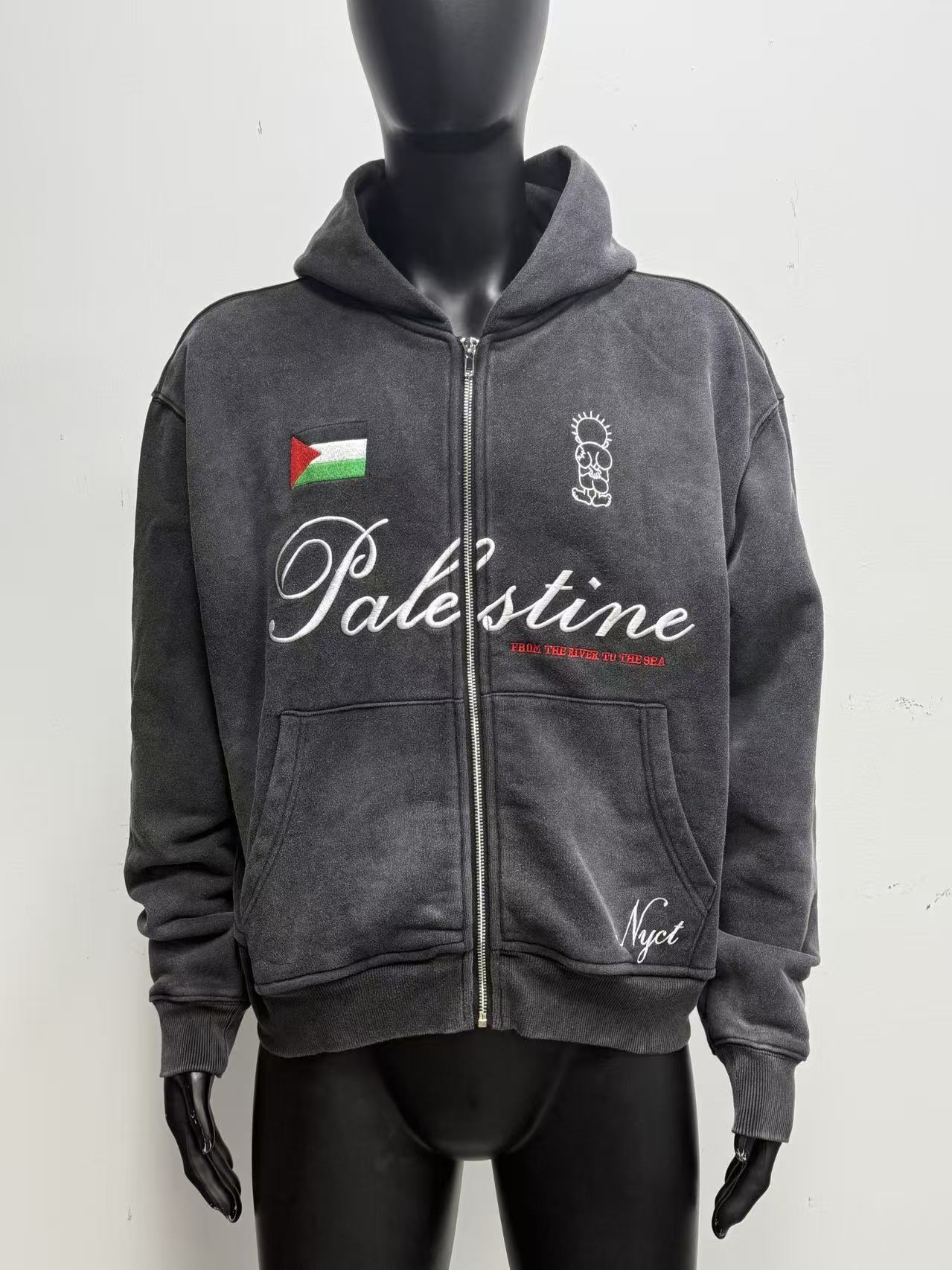
3.Sample Development and Production Control
9. Approve Actual Garment Samples Before Bulk Production
Sample development is one of the most important stages connecting design with bulk manufacturing.Some brands believe that once the design drawing has been approved, the factory can immediately begin production.However, a design drawing only communicates the intended appearance. It cannot fully demonstrate whether the finished garment will meet the brand's expectations.
A physical garment sample allows brands to evaluate:
- Whether the actual fabric meets requirements.
- Whether the fit is correct.
- Whether garment measurements are accurate.
- Whether printing colors are suitable.
- Whether embroidery is clear.
- Whether special finishing matches the design.
- Whether logos are correctly positioned.
- Whether the overall garment appearance meets expectations.
Sample approval is particularly important for streetwear products involving multiple customization techniques.
For example, a vintage-washed hoodie may involve special dyeing, printing, and localized distressing.Without complete sample testing, bulk production may encounter color changes, peeling graphics, or unexpected interactions between different processes.Brands can organize sample approval into several stages.
Stage One: Initial Sample
Confirm the basic garment pattern, fabric, and construction.
Stage Two: Decoration Sample
Confirm printing, embroidery, washing, and other special finishing techniques.
Stage Three: Final Approval Sample
Confirm garment measurements, colors, workmanship, labels, packaging, and overall appearance.
After final approval, brands should keep sample photographs, measurement records, and revision information as references for bulk production.
10. Establish Consistent Production Versions and Quality Control Standards
Even when a sample has been approved, bulk production may still encounter problems if brands and manufacturers do not maintain a consistent version management system.For example, a designer may change a logo dimension after sample approval, while the production department continues using an outdated artwork file.Alternatively, a brand may update the garment color without updating the corresponding printing placement and color instructions.These mistakes can cause finished garments to differ from approved samples.Brands and clothing manufacturers should therefore establish a clear version control system.
Each product should have a unique style number, and the following documents should be managed together:
- Final artwork files.
- Technical packs.
- Graphic dimensions and placement specifications.
- Fabric and color standards.
- Printing and embroidery process files.
- Sample approval photographs.
- Final bulk production specifications.
- Quality inspection standards.
Bulk production should also follow an appropriate quality inspection process.
For example, Chanjoye's website describes eight quality inspection procedures, including fabric inspection, colorfastness testing, and finished garment appearance checks. Specific inspection items should be determined according to the actual product and customer requirements.By conducting inspections throughout manufacturing, potential problems involving fabrics, measurements, sewing, and decoration techniques can be identified earlier.When an issue is discovered, the manufacturer should identify its cause before deciding whether to adjust the production process or remake the affected components.Brands should also agree with manufacturers on final acceptance standards, including measurement tolerances, color variations, graphic placement, and garment appearance.For long-term partnerships, standardized production documents and quality requirements help improve repeat-order efficiency and maintain consistency between different manufacturing batches.
4. Why Choose a Professional Clothing Manufacturer Instead of Only a Decoration Supplier?
For streetwear brands, artwork is only one part of the overall product development process.
A complete garment also involves fabrics, patterns, construction, cutting, sewing, decoration, quality inspection, and final delivery.
If brands work with separate suppliers for each process, they may need to spend more time coordinating artwork, technical standards, and production schedules.
For example, a brand may first hire a design agency to create graphics, then contact a printing supplier to produce the artwork, and finally find another garment factory to manufacture the finished clothing.
Without effective communication between these suppliers, problems may occur involving printing placement, graphic dimensions, fabric compatibility, and production consistency.
This is where professional clothing manufacturers provide important value.
A professional manufacturer evaluates the design from the perspective of the complete garment rather than considering only the decoration process.
For example, when manufacturing a custom hoodie, the factory needs to consider:
- Hoodie fabric weight.
- Garment fit and measurements.
- Graphic size and placement.
- Printing technique compatibility.
- Embroidery compatibility with the fabric.
- The effects of washing on the garment and artwork.
- Manufacturing consistency during bulk production.
If a design contains technical problems, an experienced manufacturer can recommend adjustments before sample development.
This can improve production efficiency and reduce additional development costs.
For brands planning to establish a long-term apparel supply chain, working with a manufacturer that offers comprehensive production capabilities can be more valuable than simply selecting the lowest-cost decoration supplier.
5. Chanjoye: How a Professional Streetwear Manufacturer Turns Designs into Finished Garments
Chanjoye is a professional men's fashion and streetwear clothing manufacturer providing OEM, ODM, and custom apparel manufacturing services to international fashion brands.
We understand that overseas brands need more than a supplier capable of basic garment processing. They need a manufacturing partner that understands their design concepts, provides technical recommendations, and has practical production capabilities.
That is why Chanjoye combines product design, fabric selection, process development, sample production, bulk manufacturing, and quality management to provide integrated apparel manufacturing support.
1.Professional Custom Streetwear Manufacturing
Our product categories include T-shirts, hoodies, jackets, pants, tracksuits, and other streetwear essentials.Customers can select different garment silhouettes, fabrics, colors, and decoration techniques according to their brand positioning.From basic apparel to technically detailed streetwear products, we aim to help customers turn creative ideas into garments ready for manufacturing.
2.OEM and ODM Clothing Manufacturing Services
For customers with completed designs, Tech Packs, measurement charts, and production specifications, we manufacture garments according to their approved requirements.ODM Manufacturing:For customers with initial product concepts or plans to develop new streetwear collections, we can provide design and product development support according to their brand positioning and product requirements.
Our customization services include:
- Fabric and color customization.
- Garment pattern and measurement development.
- Printing and embroidery.
- Garment washing and distressing.
- Custom brand logos and accessories.
- Woven labels, hangtags, and packaging.
Through OEM and ODM cooperation, we support different product development requirements for fashion brands at various stages of growth.
3. From Artwork to Finished Garments
We want customers' designs to become real products rather than remain visual concepts on a computer screen.
Our typical manufacturing process includes:
1. Design Communication: Receive customer artwork and product requirements.
2. Technical Evaluation: Evaluate fabric, fit, graphics, and process feasibility.
3. Material Selection: Confirm fabrics, accessories, and colors.
4. Sample Development: Produce samples and make necessary revisions.
5. Sample Approval: Confirm the final sample and manufacturing standards.
6. Bulk Manufacturing: Begin production according to approved specifications.
7. Quality Inspection: Inspect manufacturing processes and finished garments.
8. Packaging and Delivery: Complete packaging and shipping arrangements.
Clear documentation and communication are important throughout every stage.
4. Flexible Production for Different Brand Sizes
We understand that emerging streetwear labels and established fashion brands have different purchasing volumes, product development requirements, and production schedules.Chanjoye therefore offers flexible manufacturing arrangements, supporting small-batch trial orders and subsequent larger production orders.For first-time cooperation, brands can begin with sample approval before arranging bulk manufacturing according to their purchasing plans.The actual MOQ is evaluated according to garment style, fabric sourcing, color quantities, and decoration requirements.This approach helps brands manage purchasing plans more flexibly during new product development.
5. Quality Control and Manufacturing Support
Clothing manufacturing requires more than design and processing. It also requires consistent quality across different garments and production batches.Chanjoye's website describes eight quality inspection procedures covering areas such as fabrics, colorfastness, and finished garment appearance.We emphasize process management from sample approval through bulk production, with inspection arrangements based on individual product requirements.For international customers, we also provide order communication and production progress support to make manufacturing arrangements more transparent.
6. Frequently Asked Questions About Preparing Streetwear Artwork for Manufacturing
Q1: Can I send only a JPG image to a clothing manufacturer?
A JPG image is suitable for initial communication, but formal production generally requires editable original artwork, a clear production export, and specifications for graphic dimensions and placement.
A JPG file usually does not preserve all editable design layers and information.
Q2: Which file format is best for custom clothing printing?
There is no single file format suitable for every printing process.
Vector artwork is commonly suitable for screen-printing design handoffs, while PNG can be used in certain DTG workflows requiring transparent backgrounds.
The final format should be confirmed according to the manufacturer's equipment and production requirements.
Q3: Do I need a Tech Pack before contacting a clothing manufacturer?
Preparing a Tech Pack is recommended.
It helps manufacturers understand product fabrics, patterns, measurements, colors, manufacturing techniques, and packaging requirements.
If you do not have a complete Tech Pack yet, you can begin by providing design drawings, reference garments, and product requirements. A manufacturer may then help evaluate the development process.
Q4: How can I make sure my printing colors match my design?
Provide an agreed color standard, physical fabric references, and production samples.
Colors displayed on a monitor cannot guarantee identical results across different fabrics and printing processes. Actual samples should be reviewed before bulk production.
Q5: Can one design be used for both printing and embroidery?
Yes, but it will generally need adjustments for each process.
For example, a complicated illustration may be suitable for DTG printing, while embroidery may require simplified details and separate digitizing.
Q6: Should I approve a sample before bulk clothing production?
Yes, sample approval is strongly recommended.
Samples allow brands to evaluate actual fabrics, garment fit, graphic dimensions, colors, and special manufacturing techniques.
Approving samples before production helps reduce the risk of deviations during bulk manufacturing.
7. Conclusion: Let a Professional Clothing Manufacturer Bring Your Designs to Life
In today's streetwear market, original designs help brands establish distinctive visual identities. However, successful products also depend on effective cooperation between design and manufacturing.
From original artwork files and graphic dimensions to color standards, printing, embroidery, special decoration, sample approval, and bulk production, every stage requires clear technical information and professional manufacturing support.
If brands focus only on the visual design while overlooking actual production requirements, they may encounter unnecessary problems during sample development and bulk manufacturing.
This is why choosing a professional clothing manufacturer is so important.
Chanjoye is more than a clothing supplier. We are a professional men's streetwear and fashion clothing manufacturer specializing in custom apparel production.
Through OEM, ODM, product development, fabric customization, printing, embroidery, and bulk manufacturing services, we aim to help global brands transform creative concepts into high-quality finished garments.
Whether you are developing a new streetwear hoodie, an original graphic T-shirt, a vintage-washed jacket, or an entire streetwear collection, we aim to become a reliable manufacturing partner for your business.
Your Design. Our Manufacturing Expertise. Together, We Build Your Brand.
If you are looking for a clothing manufacturer that understands brand designs, provides professional production recommendations, and has practical manufacturing capabilities, contact Chanjoye.
📞 Phone: [86-15015158179]
📧 Email: [info@chanjoye.com]
🌐 WhatsApp:[https://wa.me/8618025298509]
Click the link above to start designing your custom streetwear today. We can’t wait to help you express your bold style!