Streetwear Manufacturer Comparison: Pick the Right Partner
Choosing the right manufacturing model is the single most important decision for your streetwear brand. This guide compares the four main options — OEM factory, print-on-demand, trading company, and local cut-and-sew — across cost, quality, MOQ, customization, and scalability. Chanjoye is an OEM ODM factory, but this page exists to help you make the right choice for YOUR brand, even if that is not us.
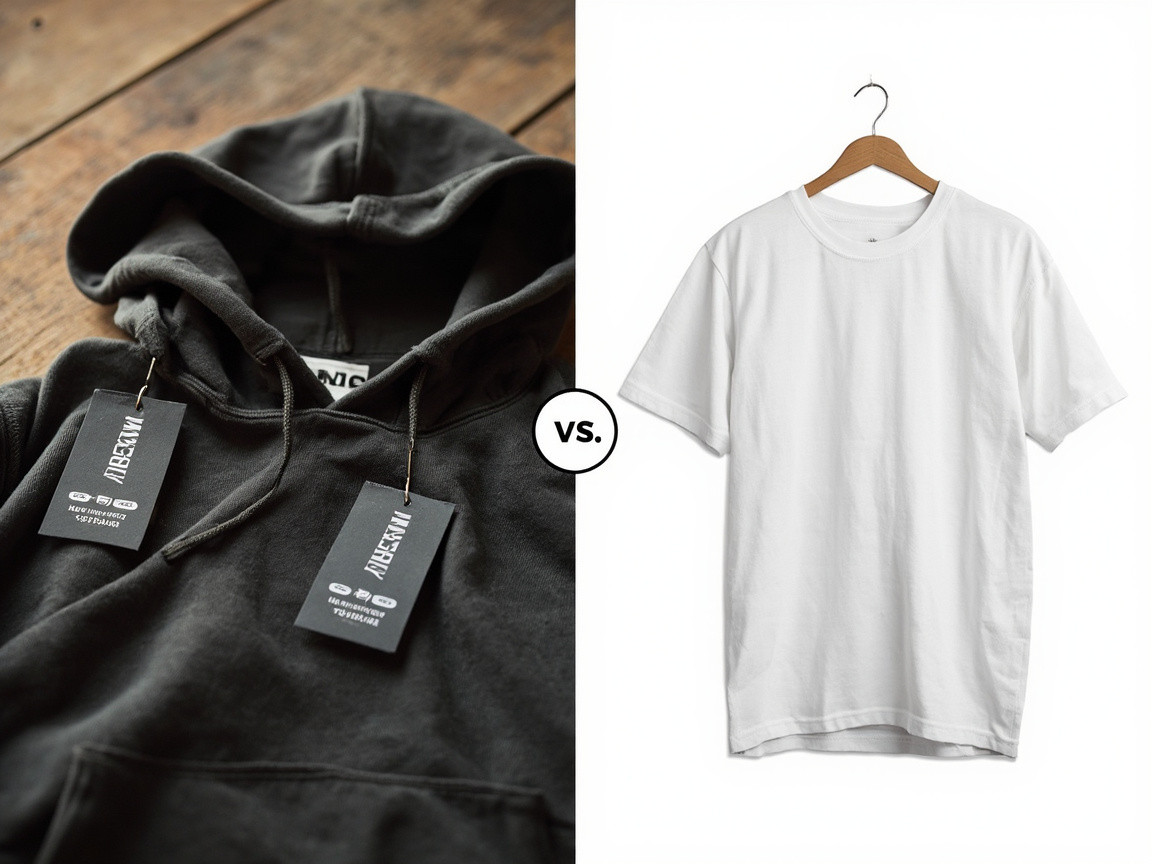
Four Manufacturing Models for Streetwear Brands
Each model serves different brand needs. Understand the trade-offs before you commit.
OEM / ODM Factory
e.g. Chanjoye
A direct manufacturer that owns its production facility. Full customization from fabric to finished garment. You control every detail of your product. Best for brands serious about building a unique product line with strong margins.
Print-on-Demand (POD)
e.g. Printful, Printify
A third-party service that prints your designs on pre-made blank garments. Zero inventory risk and no upfront bulk commitment. Best for testing designs, merch drops, and brands that do not need custom cut-and-sew.
Trading Company
Middleman / Sourcing Agent
An intermediary that sources products from multiple factories on your behalf. Useful when you need many product types from different manufacturers. You pay a premium for convenience but may lose direct quality oversight.
Local Cut-and-Sew
Made in USA / EU / Your Country
A manufacturer located in your own country. Fastest turnaround and easiest communication. Highest unit cost but strongest local-production story. Ideal for premium brands and time-sensitive launches.
Detailed Manufacturer Comparison
A side-by-side breakdown of key factors across all four manufacturing models.
| Factor | OEM / ODM Factory | Print-on-Demand | Trading Company | Local Cut-and-Sew |
|---|---|---|---|---|
| Unit Cost (T-shirt) | $3.50 – $6.50 | $12 – $20 | $5 – $10 | $15 – $30 |
| Unit Cost (Hoodie) | $9 – $15 | $30 – $50 | $15 – $25 | $40 – $80 |
| Minimum Order Quantity | 30 – 300 pcs | 1 pc | 50 – 200 pcs | 50 – 200 pcs |
| Custom Cut & Sew | Full | Not available | Via partner factory | Full |
| Custom Labels & Tags | Full | Limited options | Full | Full |
| Custom Fabric | Full | Not available | Partial | Limited sources |
| Design Support | Tech pack review | Self-service | Basic only | Usually included |
| Quality Control | In-house QC team | Limited / algorithmic | Indirect | Direct oversight |
| Production Time | 3 – 6 weeks | 3 – 7 days | 4 – 8 weeks | 2 – 4 weeks |
| Shipping Time | 5 – 15 days (intl) | 3 – 7 days | 5 – 15 days (intl) | 1 – 5 days |
| Profit Margin | 60% – 80% | 15% – 30% | 40% – 60% | 30% – 50% |
| Scalability | 30 to 10,000+ pcs | No volume cap | Multi-factory | Capacity limited |
| Minimum Budget | $1,000 – $5,000 | $50 – $200 | $2,000 – $8,000 | $3,000 – $10,000 |
When to Choose Each Manufacturing Model
The right choice depends on your brand stage, budget, and product complexity.
Choose OEM Factory When
- You are building a real brand with custom fits
- You need 60–80% profit margins to sustain growth
- Custom cut-and-sew is non-negotiable for your designs
- You can manage a 3–6 week production timeline
Choose POD When
- You are validating designs before committing to inventory
- You have zero upfront capital to invest in bulk
- Your designs work on standard blank garments
- You are OK with 15–30% profit margins
Choose Trading Company When
- You need multiple product types from different factories
- You want sourcing handled by an experienced team
- You are willing to pay a 15–30% middleman premium
- You do not have time to vet factories individually
Choose Local When
- Turnaround time is critical for your launch calendar
- A Made in USA / EU story is central to your brand
- Premium pricing supports small-quantity production
- In-person factory visits are important to you
Hidden Costs Across Manufacturing Models
Beyond the unit price, these often-overlooked costs can significantly impact your total landed cost.
| Hidden Cost | OEM / ODM Factory | Print-on-Demand | Trading Company | Local Cut-and-Sew |
|---|---|---|---|---|
| Sampling Fees | $50 – $150 per sample, often refundable on bulk order | No sampling; order one retail unit to check quality | $80 – $200 per sample, rarely refundable | $100 – $300 per sample, sometimes included in bulk |
| Shipping | International freight, $200–$800+ per shipment | Built into per-unit price, typically $5–$10 per item | International freight, markup often applied | Domestic shipping, $20–$100 per shipment |
| Import Duties | 5% – 20% of declared value depending on country | Usually included or pre-collected at checkout | 5% – 20% of declared value; verify HS code accuracy | None for domestic production |
| Communication Overhead | Language barrier possible, time-zone gap for Western brands | Minimal; mostly self-serve platform interactions | Agent handles communication; you lose direct factory access | Minimal; same language and time zone |
| Quality Risk | Manageable with pre-production samples and QC inspection | Print inconsistency; no control over blank garment source | Higher risk; quality depends on unknown subcontractor | Low risk; easy to inspect and return |
| MOQ Inflexibility | Fixed minimums per style, color, and size | No minimum; one unit at a time | Often higher MOQ than dealing directly with factory | Usually negotiable but price increases sharply below MOQ |
Brand Stage Recommendations
Your ideal manufacturing model evolves as your brand grows. Here is what typically works best at each stage.
Idea Validation 0 Sales
Recommended: Print-on-Demand
Test your designs with zero inventory risk. POD lets you launch a store in days, validate which designs sell, and gather real customer feedback before investing in bulk production. If a design does not sell, you lose nothing but the listing time.
First Collection Pre-Launch
Recommended: ODM Factory — Small Batch
Once you have validated demand, move to an ODM factory for small-batch production (30–100 pieces per style). You get custom cut-and-sew, your own labels, and dramatically better margins. Chanjoye and similar factories offer startup-friendly MOQ for first collections.
Growing Consistent Sales
Recommended: OEM Factory
Scale up with an OEM factory that can handle 300–3,000+ pieces per style. Negotiate better per-unit pricing, establish a repeatable quality standard, and build a long-term production partnership. At this stage, factory relationships become a competitive advantage.
Scaling Rapid Growth
Recommended: OEM Factory — Direct Partnership
At scale, direct factory relationships unlock the best pricing, priority production slots, and collaborative product development. Your factory becomes an extension of your brand. Invest in regular QC visits and dedicated production line arrangements.
Premium / Luxury Established Brand
Recommended: Local Cut-and-Sew or Premium OEM Factory
For luxury streetwear, proximity matters. Local manufacturing gives you the Made in USA / EU story and fastest turnaround. Alternatively, partner with a premium OEM factory that specializes in high-end construction, premium fabrics, and luxury packaging. Some brands use both: core line overseas, limited drops locally.
Red Flags When Evaluating Any Manufacturer
Protect your brand. These warning signs apply whether you are vetting an overseas factory, a local shop, or a POD platform.
No physical address, factory photos, or verifiable location on their website or communication
Refuses to provide a pre-production sample before the bulk order is placed and paid
Prices significantly below market average — if it sounds too good to be true, it usually is
No written contract or purchase order; everything is verbal or through informal chat messages
Poor communication during the inquiry stage — slow responses now predict worse service later
Cannot provide references, case studies, or images of past work for brands in your category
Requests 100% payment upfront with no escrow, milestone payment, or trade assurance option
Frequently Asked Questions
Why are POD profit margins so much lower than OEM manufacturing?
POD services charge a premium because they handle printing, fulfillment, and shipping individually for each order. They also source blank garments at wholesale prices and mark them up. An OEM factory produces in bulk, spreading fixed costs across hundreds or thousands of units. A T-shirt that costs $3.50 from an OEM factory might cost $12–$20 through POD because the POD provider is paying for the blank garment, the print labor, the packaging, and the shipping — all at single-unit rates.
Is it safe to work with a factory in China?
Yes, when you follow proper vetting procedures. Thousands of successful streetwear brands manufacture in China. The key steps: verify the factory has a physical address you can confirm, request a video tour or live video call showing the production floor, order a pre-production sample before committing to bulk, use a written contract with clear quality specifications, and pay through trade assurance or milestone-based payment terms. Never send full payment upfront to a factory you have not verified. Reputable factories like Chanjoye welcome these verification steps.
Can I switch from POD to an OEM factory later?
Absolutely — this is a common and recommended path. Many successful streetwear brands start on POD to validate their designs and build an audience, then transition to OEM manufacturing once they have proven demand. When you make the switch, you will need to provide your new factory with tech packs or reference samples of your best-selling designs. The transition typically takes 4–8 weeks from first contact to receiving your first bulk order. Your existing customers will notice the quality improvement immediately.
How do I verify that a factory is legitimate?
Start with these five verification steps: (1) Request the factory's business license and verify it on the national business registry for that country. (2) Ask for a live video walkthrough of the production floor — not pre-recorded footage. (3) Request references from at least three brands they currently produce for, and contact those brands directly. (4) Order a pre-production sample and evaluate it independently. (5) Check third-party platforms like Alibaba's Verified Supplier program or request an independent inspection report. Legitimate factories welcome due diligence; fraudulent ones will push for payment before verification.
What is the typical turnaround difference between these models?
POD is fastest: 3–7 days from order to delivery (per unit). Local cut-and-sew follows: 2–4 weeks for a batch. OEM factories take 3–6 weeks for production plus 5–15 days for international shipping. Trading companies add 1–2 weeks on top of factory timelines for sourcing coordination. Total time from design finalization to having products in hand: POD (1–2 weeks), Local (3–6 weeks), OEM Factory (5–9 weeks), Trading Company (7–12 weeks). Plan your launch calendar accordingly and always build in a 2-week buffer for unexpected delays.
Ready to Explore OEM Manufacturing?
Chanjoye is an OEM ODM factory and we believe in transparency. We hope this comparison helped you understand your options. If OEM manufacturing fits your brand stage and goals, contact us to see if we are the right fit for your brand.
