How do I choose the right custom jacket or coat for my brand?
- Share
- Issue Time
- Aug 26,2026
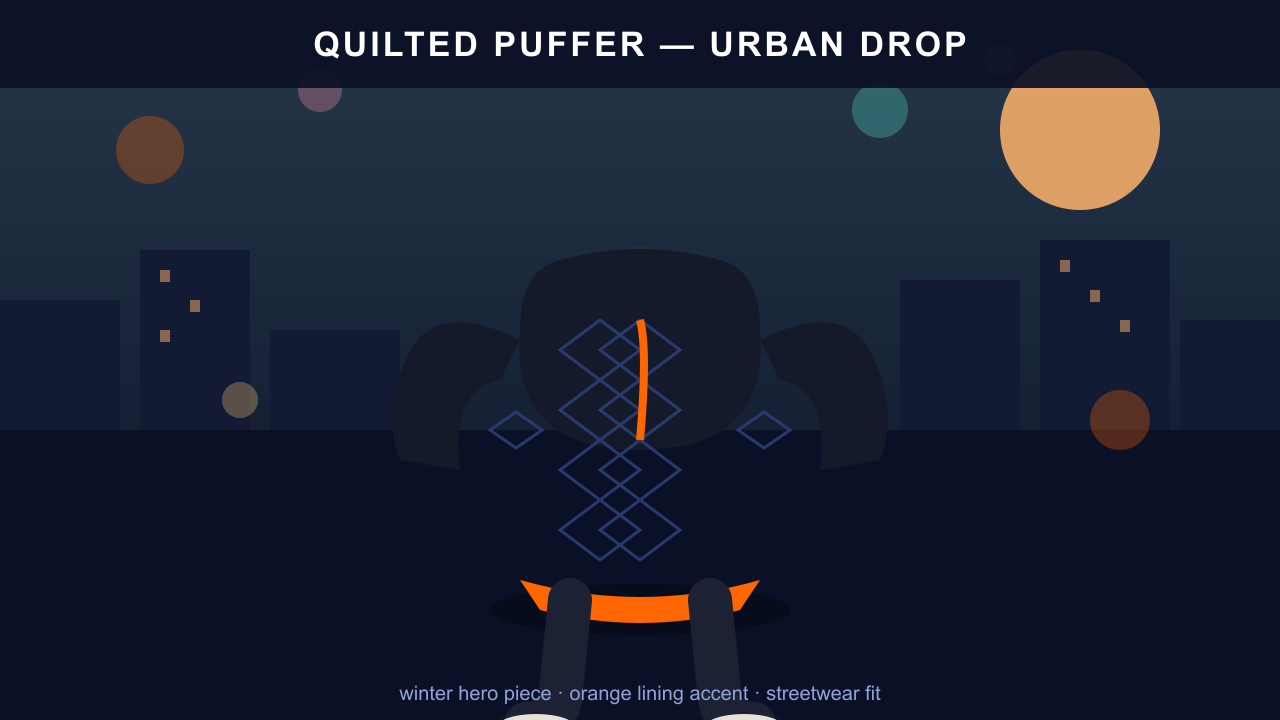
How do I choose the right custom jacket or coat for my brand?
Jackets and coats are the highest-value pieces most streetwear and fashion brands ever produce, but they are also the easiest to get wrong. The right choice depends on five decisions made in order: target season, shell fabric, insulation, fit, and trims. Work through those five steps before you brief a factory, and you will avoid the two classic mistakes of outerwear buying — a jacket that is too warm for its season or a coat that looks premium but falls apart after ten washes. As an OEM and ODM outerwear manufacturer with 20+ years of experience, chanjoye guides brands through exactly this decision path on every custom jacket and coat program.
Direct Answer
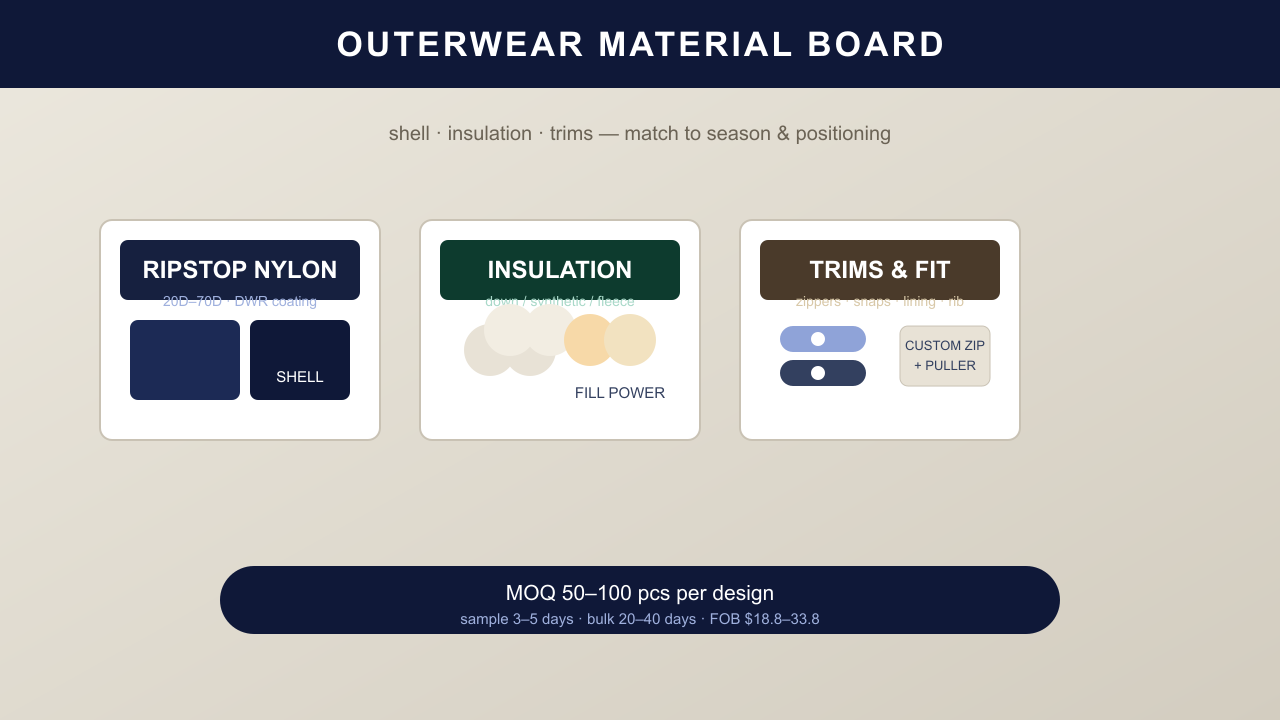
Choose a custom jacket or coat by deciding, in order: (1) the season and climate your customer actually lives in, (2) the shell fabric that matches that climate and your brand image, (3) the insulation level and type that delivers the warmth without adding unnecessary bulk, (4) the fit and silhouette that defines your brand identity, and (5) the trims and functional details that make the garment feel finished. When these five layers are aligned — for example a waterproof nylon ripstop shell, synthetic insulation, a boxy streetwear fit, and custom zipper pulls for a winter drop — the result sells at a premium and builds repeat demand. With chanjoye, MOQs start at 50–100 pieces per design and samples can be in your hands within 3–5 days, so you can validate all five decisions before committing to bulk.
Detailed Explanation
1. Start with the season and climate, not the style
The single biggest driver of jacket cost and construction is the temperature range the garment must survive. A spring windbreaker for Los Angeles and a winter parka for Chicago are different products in every dimension: shell, insulation, lining, zipper weight, and price. Write down the coldest and warmest conditions your customer will wear the piece in, then design to that window. Brands that skip this step typically over-insulate (bulky, expensive, hard to sell) or under-insulate (returns and negative reviews). A useful rule of thumb: below 0°C you need a real insulation layer; 5–15°C a mid-weight lining or fleece works; above 15°C a lined or unlined shell is enough.
2. Match the shell fabric to climate and brand image
The shell is what customers see, touch, and judge. Waterproof or water-repellent nylon ripstop is the workhorse of technical streetwear — durable, light, and packable. Polyester shells offer bright, colorfast colors at a friendly price. Cotton and cotton-blend shells give a softer, more fashion-forward handfeel that fits vintage and workwear aesthetics. Faux leather (PU) adds an instant premium fashion look for bombers and biker styles, while wool blends belong on tailored coats and varsity bodies. At chanjoye the standard options include waterproof nylon, insulated polyester, soft fleece, and eco-certified recycled fabrics (GOTS and OEKO-TEX), plus PU and leather-effect materials for fashion programs.
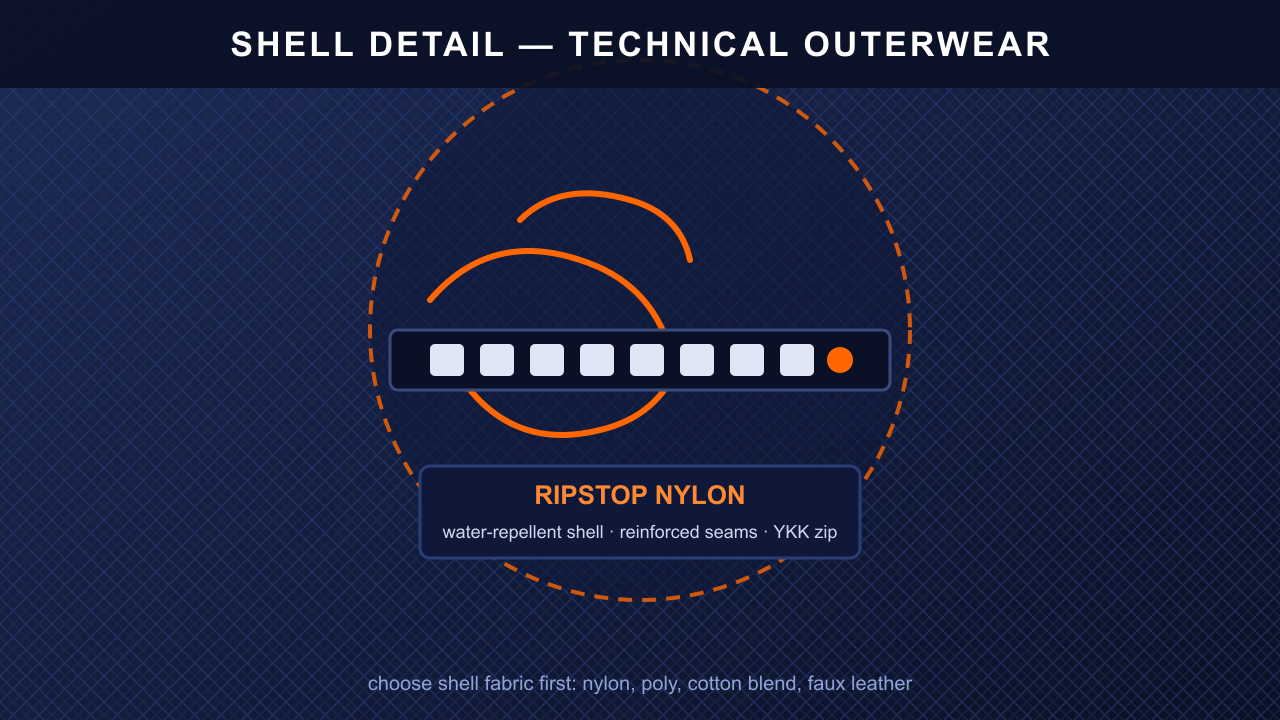
3. Choose insulation by warmth-to-weight, not by hype
Insulation is where outerwear budgets are made or wasted. Down delivers the best warmth-to-weight ratio and packs down small, but it loses performance when wet and costs more. Synthetic insulation (polyester fills, including recycled versions) keeps you warm even damp, is easier to care for, and is more vegan and price-friendly. Fleece and sherpa linings sit between shell and insulation — great for transitional pieces and casual coats. For a streetwear winter hero piece, a quilted puffer with synthetic fill is the safest commercial bet: it photographs well, reads instantly as “winter”, and keeps costs predictable. If your brand targets alpine or outdoor customers, invest in down with a higher fill power and a waterproof shell instead.
4. Fix the fit and silhouette before you source fabric
Jacket fit defines the brand. Streetwear outerwear leans boxy, oversized, and drop-shoulder; lifestyle and corporate programs lean regular or tailored; sports lines need an athletic, mobility-first cut. Your fit block also drives fabric consumption and price — an oversized puffer uses noticeably more shell and fill than a slim cut. Decide the silhouette on paper, provide a size spec (or choose from the factory’s blocks), and always approve a fit sample. chanjoye offers custom sizing, 3D previews, and samples within 3–5 days precisely so the fit is locked before bulk production starts.
5. Finish with trims and functional details
Trims turn a garment into a product. Zipper quality (metal vs nylon, custom pulls), snap buttons, drawcords and toggles, hood construction, pocket types (zip, patch, cargo, hidden), lining fabric, and rib cuffs all influence both perceived quality and unit cost. Two jackets in the same fabric can differ by 20–30% in price purely because of trims. Choose trims that match your positioning: YKK-class metal hardware for premium drops, matte nylon zippers for technical pieces, branded drawcords for streetwear details.
6. Position the piece inside your collection
Finally, decide what role the jacket plays. Is it the hero piece that anchors a winter drop (puffer, statement parka), a bridge item for autumn (windbreaker, bomber, denim jacket), or a brand-uniform piece for teams and corporate gifting (varsity, technical jacket)? Heroes can carry higher cost per unit; bridge and uniform pieces must hit sharper price points. Most successful brands run one hero outerwear style per season plus one or two lower-cost styles, which keeps inventory risk low and margin healthy.
Quick Reference: Outerwear Styles vs. Season, Shell, and Insulation
| Style | Best season | Typical shell | Insulation | Collection role |
|---|---|---|---|---|
| Windbreaker / track jacket | Spring & autumn | Nylon, polyester | Unlined or mesh lining | Bridge item, teamwear |
| Bomber jacket | Autumn | PU leather, nylon, cotton | Light fill or quilted lining | Fashion statement piece |
| Denim jacket | Transitional | Denim, washed cotton | None (lined optional) | Layering staple |
| Technical hooded jacket | All-season | Waterproof ripstop nylon | Light synthetic or none | Functional hero |
| Quilted puffer | Winter | Nylon, polyester | Synthetic fill or down | Winter hero piece |
| Varsity / letterman | Autumn & winter | Wool body, leather or PU sleeves | Quilted lining | Brand uniform, school & team |
| Wool / long coat | Winter | Wool blend | Lining, optional fill | Premium tailored piece |
| Production factor | Typical range with chanjoye | Notes |
|---|---|---|
| MOQ per design | 50–100 pcs | Lower options for repeat programs |
| Sample time | 3–5 days | 3D preview available before sewing |
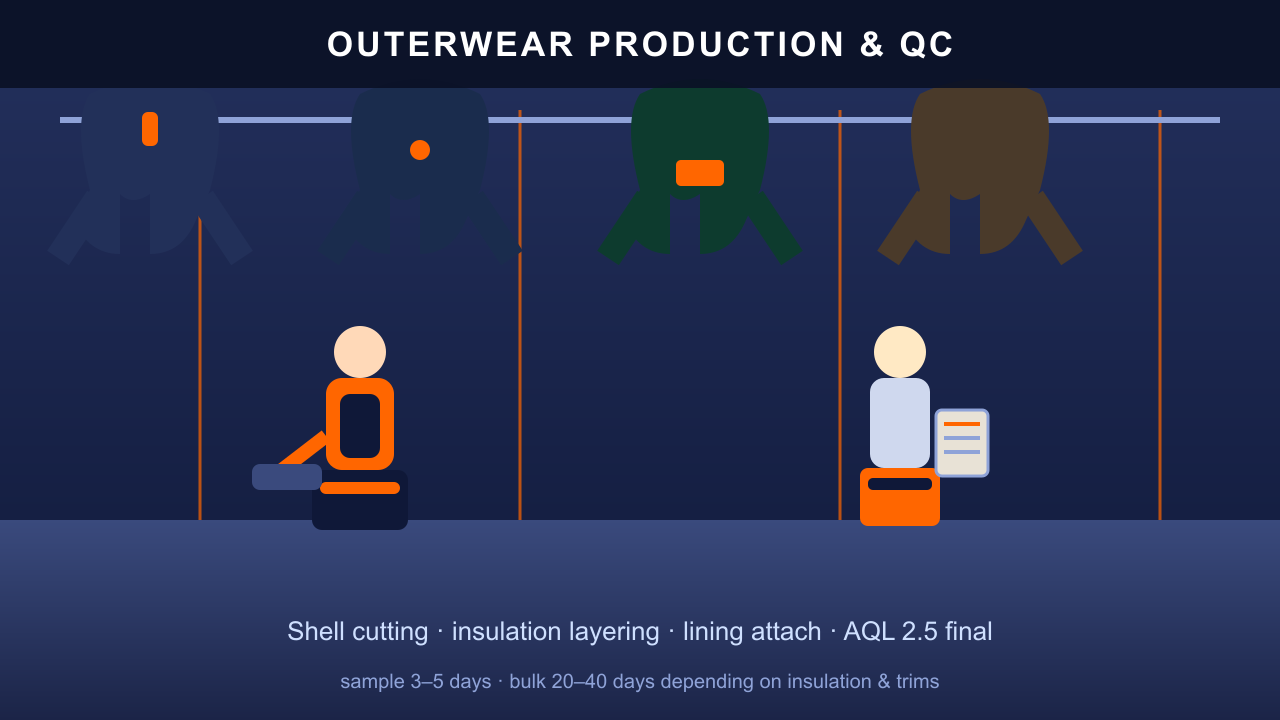
| Bulk lead time | 20–40 days | 3–4 weeks typical; depends on insulation and trims |
| FOB price range | Roughly $18.8–$33.8 | Varies with shell, fill, and hardware |
| Decoration options | Embroidery, screen print, patches, 3D embossed sleeves | Combine with custom zipper pulls and labels |
| Certifications available | GOTS, OEKO-TEX recycled fabrics | Supports eco-positioned brands |
Figures are indicative and change with shell fabric, fill type, trims, and order volume. Always confirm with a factory quotation.
Case Study: How a Brand Picked Its Winter Hero Jacket
A streetwear label preparing its first winter drop came to chanjoye uncertain whether to build a puffer, a parka, or a bomber. Walking the five-step framework, the team first fixed the target climate: the brand’s core market was northern China, Europe, and the US East Coast, with winters around −5°C to 5°C — which pointed to a real insulation layer. For the shell they chose water-repellent nylon ripstop so the piece worked in snow and light rain, and for insulation a recycled synthetic fill that kept cost and weight predictable. They locked a boxy, oversized streetwear fit with an orange lining accent as the brand signature, upgraded to matte metal zippers with custom pulls, and added a woven neck label. The factory produced a fit sample in 4 days, confirmed shrinkage and size grading, and shipped the bulk order in under five weeks. The puffer became the drop’s best-selling item, sold through in two weeks, and the label reordered two additional colorways the next season. The same framework also produced a lighter windbreaker bridge piece for autumn at a much lower price point, giving the collection a complete seasonal story.
Checklist Before You Order Custom Jackets or Coats
- Write down the coldest and warmest conditions the garment must handle.
- Choose the shell fabric for climate first, brand image second.
- Match insulation type (down, synthetic, fleece, or none) to warmth needs and care expectations.
- Lock the fit block and silhouette before sourcing fabric.
- Approve a fit sample and test the sample after washing for shrinkage and colorfastness.
- Specify trims: zipper type, pulls, snaps, drawcords, hood, pocket layout, and lining.
- Position the piece in the collection: hero, bridge, or uniform item.
- Confirm MOQ, lead time, and ask for an AQL 2.5 inspection report before shipment.
Related Questions
Build Your Outerwear Line with chanjoye
From shell fabric selection and insulation planning to custom zippers, embroidery, and private labels, chanjoye supports full OEM and ODM jacket and coat production with MOQs from 50–100 pieces, free samples, and 3D previews. Send your tech pack and get a material plan, sampling schedule, and quotation tailored to your collection.
Explore chanjoye Custom Jacket & Coat Production